
Difference Between Physical And Chemical Properties
So, there I was, in my kitchen, trying to impress my friend with my mad scientist skills. I had this brilliant idea to turn lemons into lemonade, you know, the old-fashioned way. I squeezed, I mixed, I even added a splash of sparkling water for that extra fizz. But guess what? My 'lemonade' was more like a sad, flat, yellow liquid. Why, you ask? Because I forgot that temperature is a physical property, and it wasn't going to change no matter how much I wished for it.
Now, you might be wondering, "What's the big deal about physical and chemical properties? Can't we just mix them up like we do with our socks?" Well, my friend, let me tell you, it's like trying to dance the tango with a waltz song. They just don't go together. So, let's dive into the world of properties, shall we?
Physical Properties: The Party Animals
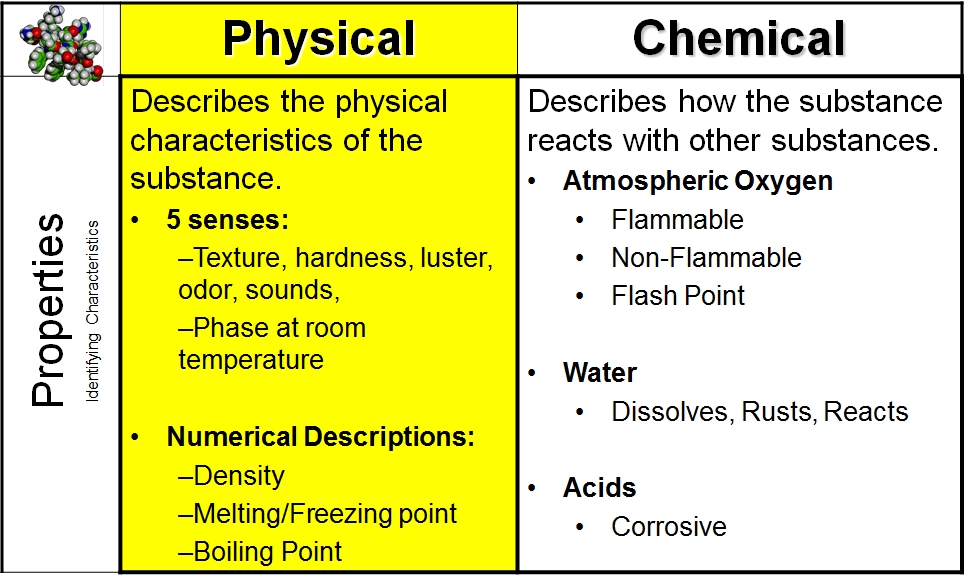
Physical properties are like the life of the party. They're the ones who are always ready to mingle and change with the situation. They describe what something looks, feels, or tastes like. Like my lemonade's temperature, physical properties can change. Heat it up, and your lemonade becomes warm. Freeze it, and it turns into a slushy. But here's the thing, folks, no matter what you do, the chemical composition of your lemonade stays the same. It's still lemon juice, water, and sugar.
Must Read
Other examples of physical properties include color, shape, size, and state of matter. Think about it, when you're shopping for apples, you're looking at physical properties - you want them to be red, round, and big, right? But you're not changing the chemical composition of the apple by picking the red ones over the green.

Chemical Properties: The Wallflowers
Chemical properties, on the other hand, are the wallflowers of the party. They're more reserved, only showing up when there's a reaction involved. They describe how a substance behaves when it interacts with other substances. For instance, when you add baking soda to vinegar, you get a fizz. That's a chemical property in action - the substances are reacting and changing each other's chemical composition.
Other examples of chemical properties include flammability, reactivity, and conductivity. These properties only show up when there's a chemical reaction happening. For example, gold is a great conductor of electricity, but that property only matters when it's in a circuit, reacting with the flow of electrons.

Why It Matters
So, why should you care about the difference between physical and chemical properties? Well, my friend, it's all about understanding how the world works. If you're a scientist, knowing the difference can help you predict reactions and create new substances. If you're a chef, understanding properties can help you create the perfect dish. And if you're just a curious person, knowing the difference can help you make sense of the world around you.
Plus, it's always fun to impress your friends with your mad scientist skills. Just remember, next time you're trying to make lemonade, don't forget about temperature. It's a physical property, and it's not going to change just because you wish it would.