
If Enthalpy Is Positive Is It Exothermic Or Endothermic
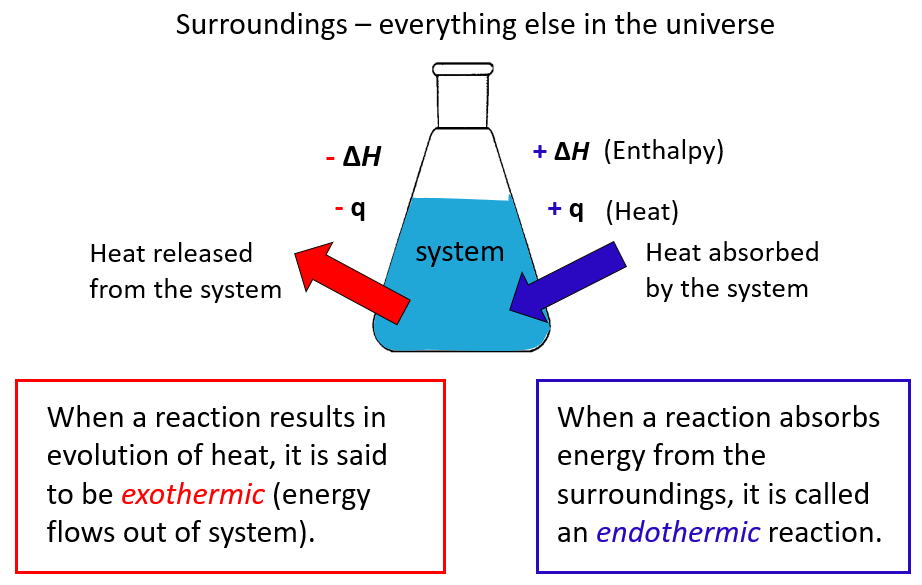
Alright, gather 'round, folks. I've got a tale to tell about a little something called enthalpy. Now, don't go rolling your eyes, this isn't some boring science lesson. It's more like a whacky game of 'Guess Who's Hot and Who's Not' in the world of thermodynamics.
So, what's enthalpy when it's at home?
Imagine enthalpy as the thermodynamics equivalent of your mom's famous casserole. It's the total energy of a system, all bundled up and ready to go. It's like the grand total of all the energy in your body, from the heat of your skin to the energy stored in your muscles. Pretty neat, huh?
Now, let's talk about signs
In the world of thermodynamics, signs matter. They're like the traffic lights of the energy world, telling us which way to go. So, when we talk about enthalpy, we're talking about a change in it - ∆H. And just like in real life, a positive change isn't always a good thing.
Must Read
So, when we see ∆H with a plus sign (+), it's like seeing a big, red 'STOP' sign. It's telling us that energy is flowing out of the system. But don't worry, it's not like the system is losing its energy and collapsing. It's just moving that energy elsewhere.
Exothermic: The Party Animal
Now, let's talk about exothermic reactions. These guys are the life of the party. They're like your friend who's always bringing the snacks and the good vibes. When they happen, they're releasing energy - usually heat - into the surroundings. And guess what? That's exactly what happens when enthalpy is positive!
So, when you see a positive ∆H, you can think of it as the system saying, "Hey, I've got some extra energy here. Who wants it?" And the surroundings are always like, "Ooh, me! Me!"
But wait, there's more!
Here's where it gets interesting. You might think that an exothermic reaction is always a good thing. I mean, who doesn't love a good party, right? But remember, energy is like money. Just because you're giving it away doesn't mean it's a good deal.

Sometimes, the system has to do some serious work to get that energy in the first place. So, even though it's giving that energy away, it might still be a net loss. It's like giving your last $20 to a stranger. Sure, you're helping them out, but you're not exactly rolling in dough anymore.
Endothermic: The Freeloader
Now, let's talk about endothermic reactions. These guys are like the freeloaders at the party. They're always looking for a handout. When they happen, they're absorbing energy - usually heat - from the surroundings. And guess what? That's exactly what happens when enthalpy is negative!
So, when you see a negative ∆H, you can think of it as the system saying, "Hey, I could really use some energy over here. Who's got some to spare?" And the surroundings are always like, "Well, I guess I can spare a little..."
But is it really that simple?
You might be thinking, "Okay, so if enthalpy is positive, it's exothermic, and if it's negative, it's endothermic. Got it." But hold your horses, because thermodynamics is a fickle mistress.

Remember how I said enthalpy is like the grand total of all the energy in a system? Well, sometimes, a system can release energy in one way and absorb it in another. It's like your friend who's always giving you stuff, but then expects you to pay for the gas to get there. It's complicated, okay?
So, even though enthalpy can give us a good idea of whether a reaction is exothermic or endothermic, it's not always a sure thing. Sometimes, you've just got to do a little more digging to figure out what's really going on.
So, what's the moral of the story?
Well, folks, the moral of the story is that enthalpy is like the weather. It can give you a good idea of what's going on, but it's not always 100% accurate. And just like the weather, it's always changing, always moving. But unlike the weather, it's not something you can complain about to your coworkers.
So, the next time you're wondering whether a reaction is exothermic or endothermic, just remember: if enthalpy is positive, it's like the party animal, giving away its energy. If it's negative, it's like the freeloading friend, always looking for a handout. But remember, it's not always that simple. Thermodynamics never is.
And with that, I've said my piece. Now, who's ready for another round of drinks? I'm parched from all this talking about energy!