
What Do Mass And Weight Have In Common

Ever found yourself in a debate with a friend about whether a heavy book is the same as a massive one? You're not alone! The terms 'mass' and 'weight' often get mixed up, but they're like two peas in a pod when it comes to understanding the world around us. So, let's dive in and clear things up, shall we?
Mass: The Big Picture
Imagine you're at the farmers' market, eyeing a giant watermelon. You might think, "Wow, that's a massive watermelon!" Mass is all about the amount of matter packed into something. It's like the watermelon's 'substance' - the more it has, the more massive it is. In the world of physics, mass is measured in kilograms (kg).
Here's a fun fact: If you were to weigh yourself on the moon, you'd weigh less than on Earth. But your mass would stay the same. That's because mass is about the 'stuff' you're made of, while weight is about how much you're pulled towards the ground.
Must Read
Weight: The Pull Factor
Now, let's talk about weight. Remember that giant watermelon? If you pick it up, you'll feel its weight. Weight is all about how much something is pulled towards the ground by gravity. It's like the tug-of-war between you and the watermelon - the stronger the tug, the heavier the watermelon feels.
Weight is measured in different units, like pounds (lb) or newtons (N), and it changes depending on where you are. On the moon, things weigh less because the moon's gravity is weaker than Earth's. But your mass stays the same - you're still the same 'you' on the moon as you are on Earth!
Mass and Weight: Besties for Life
So, what do mass and weight have in common? They're like best friends - you can't have one without the other. Mass is what you're made of, and weight is how much you're pulled towards the ground. They're both crucial in understanding the world around us, from why things fall to why we can float in space.
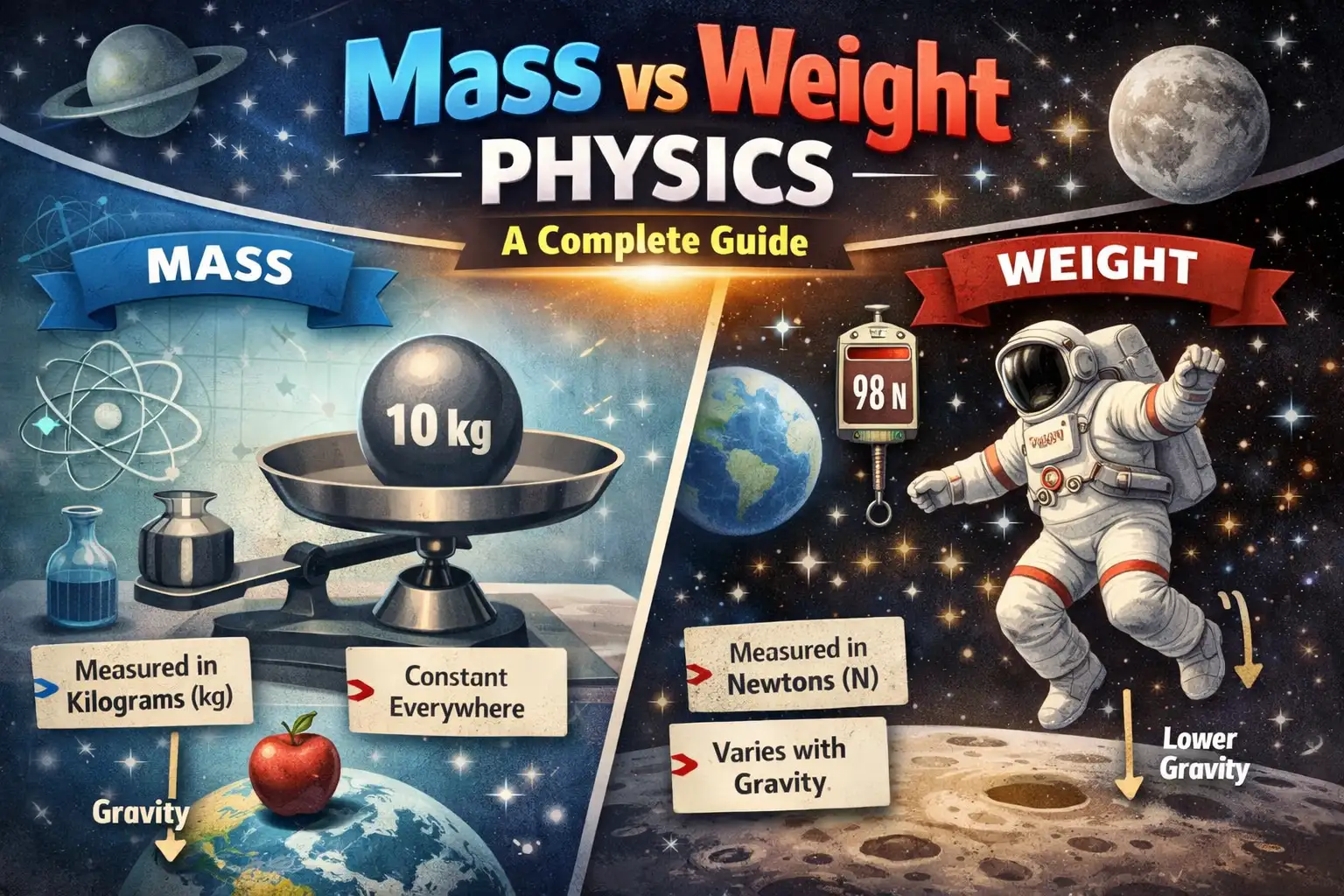
Here's a simple way to remember it: Mass is about 'stuff', and weight is about 'pull'. The more 'stuff' you have, the more you'll be pulled towards the ground. But remember, weight changes depending on where you are, while mass stays the same.
Why Should You Care?
You might be thinking, "This is all well and good, but why should I care about mass and weight?" Well, understanding these concepts can make everyday things make more sense. Like why a heavy box feels lighter when you're on a scale, or why astronauts can float around in space.
Plus, it's just fun to know! The next time you're at the market, you can impress your friends with your newfound knowledge. "That's not just a heavy watermelon," you'll say, "It's a massive one!" And who knows, maybe you'll even start a friendly debate about mass and weight. Just remember to keep it light - after all, we're talking about weight!