
Where Did Pop Art Start

So, picture this: it's the 1950s, post-WWII America. You're walking down the bustling streets of New York, and suddenly, you spot something that makes you do a double-take. It's not a fancy painting in a gallery, but a comic strip poster plastered on a wall. And it's loud, with bold colors and exaggerated features. That, my friend, is your first encounter with Pop Art.
Now, you might be wondering, "What's so special about a comic strip on a wall?" Well, buckle up, because we're about to dive into the vibrant, chaotic, and utterly fabulous world of Pop Art.
Birth of a Movement
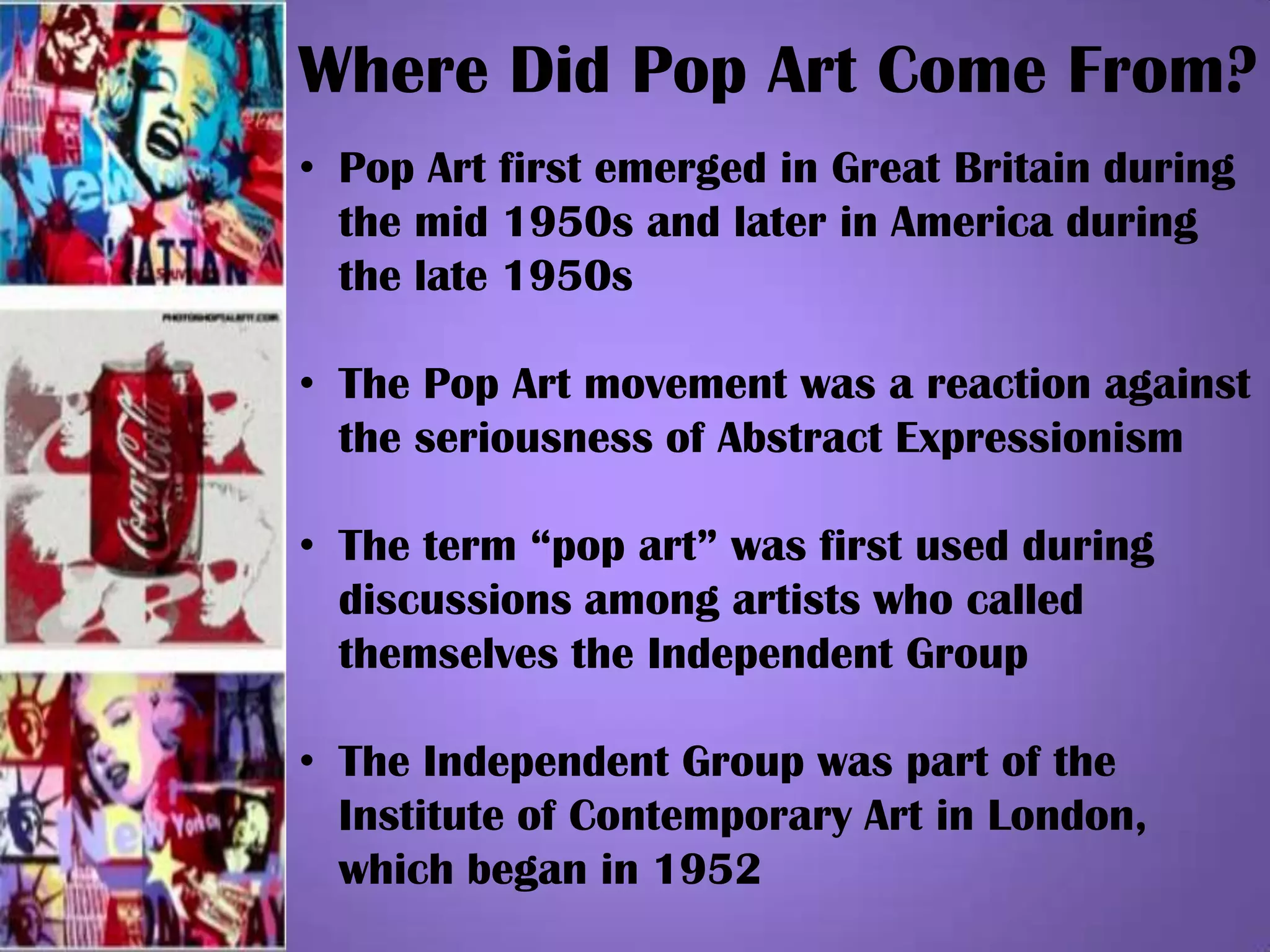
Pop Art, as you might have guessed, wasn't born in some stuffy old art studio. No, it was conceived in the heart of popular culture - in comic books, advertisements, and even on TV screens. It was a rebellion against the serious, intellectual art of the time, a middle finger to the stuffy old art establishment.
Must Read
At the helm of this revolution were artists like Andy Warhol and Roy Lichtenstein. These guys weren't your typical artists, painting in solitude in some French countryside. No, they were right there in the thick of it, absorbing the neon lights and blaring radios of post-war America.
Andy Warhol: The King of Pop
Andy Warhol, the king of Pop Art, was a man who understood the power of celebrity and consumer culture. He took everyday objects - like soup cans and Coca-Cola bottles - and turned them into art. Why? Because, as he famously said, "What's great about this country is that America started the tradition where the richest consumers buy essentially the same things as the poorest."
Warhol's Campbell's Soup Cans (1962) wasn't just a commentary on consumer culture; it was a celebration of it. And that, my friend, was the essence of Pop Art.

Roy Lichtenstein: The Comic Book Hero
Meanwhile, Roy Lichtenstein was busy transforming comic book panels into large-scale paintings. His Whaam! (1963) is a perfect example - it's a comic book explosion, blown up to monumental proportions. Lichtenstein wasn't just copying comic books; he was elevating them, making us see them in a new light.
And that, right there, was the beauty of Pop Art. It took the everyday, the ordinary, and turned it into something extraordinary.
Pop Art Goes Global
Pop Art didn't stay confined to the streets of New York for long. It spread like wildfire, crossing the Atlantic and landing in the heart of London. British artists like Peter Blake and David Hockney joined the fray, adding their own unique flavors to the movement.
Blake, for instance, combined images from popular culture with elements of fine art, creating a unique visual language. Hockney, on the other hand, brought a sense of wit and irony to Pop Art, often incorporating elements of gay culture into his work.
Pop Art Today
So, where's Pop Art today? Well, it's still very much alive and kicking. You can see its influence in everything from street art to graphic design. It's in the bright colors and bold lines of contemporary art, in the way we celebrate popular culture, in the way we consume and are consumed by it.
And the best part? You don't need to be in an art gallery to appreciate it. Pop Art is everywhere - on billboards, on TV screens, on the walls of your local coffee shop. It's a part of our everyday lives, a testament to the power of popular culture.
So, the next time you see a bright, bold image that makes you stop and stare, remember: that's Pop Art. And it's not just art - it's a way of seeing the world.