
French Impressionist Artist Edgar Degas Sat

Degas: The Ballet-Obsessed, Horse-Racing Fanatic Who Painted Like a Rebel
Alright, gather 'round, folks. I've got a tale to tell about a French artist who was as eccentric as they come. We're talking about Edgar Degas, the guy who painted ballet dancers so beautifully, you'd think he was secretly a ballerina himself. But hold onto your berets, because this story's about to take a few twirls and leaps you wouldn't expect.
Meet Edgar: The Original Artistic Rebel
Edgar Degas was born in Paris in the 1830s, a time when artists were expected to paint like the old masters - you know, all serious and stuffy. But our Edgar, he was a rebel. He didn't want to paint stuffy old portraits or boring landscapes. No, sirree! He wanted to capture the beauty in everyday life, and he wanted to do it his way.
You see, Edgar had this thing for perspective. He'd tilt his paintings this way and that, making you feel like you were right there in the scene. And his subjects? Well, they were as unconventional as they come. He painted cafés, racecourses, and even a few nudes (but we'll get to that later).
Degas and the Dance
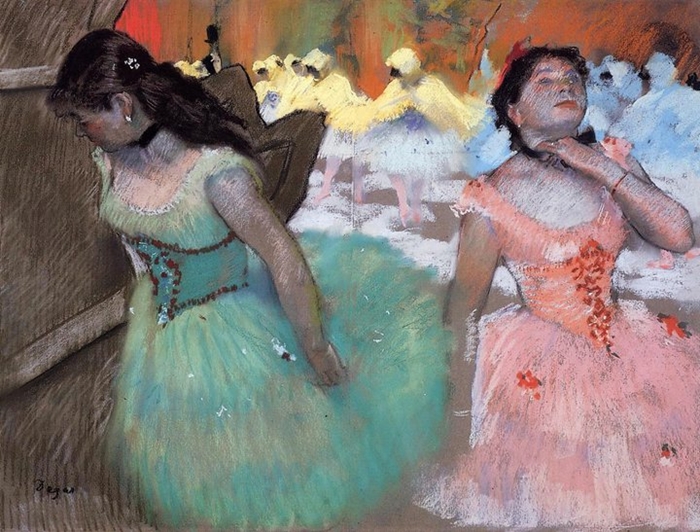
Now, here's where things get interesting. Edgar was obsessed with ballet. I mean, obsessed. He'd spend hours at the Paris Opera, sketchbook in hand, drawing those dancers as they rehearsed. He'd capture them mid-pirouette, mid-leap, mid-everything. And he'd do it in this loose, sketchy style that was as far from the old masters as you could get.
But here's the kicker: he didn't just paint the dancers in their glory. Oh no, he'd show them warming up, tying their shoes, even taking a quick break to smoke a cigarette. He wanted to show the world that these dancers were real people, not just perfect, ethereal creatures on stage.
Degas and the Derby
But ballet wasn't Edgar's only love. No, he also had a thing for horse racing. I mean, who doesn't love a good day at the races, right? But Edgar, he took it to the next level. He'd set up his easel right there in the stands, painting the horses as they thundered past. And let me tell you, his horse paintings are something else. They're full of energy, movement, life.
And get this - he even invented a new way to paint them! He'd do these quick, loose sketches, then go back and add details later. It was like he was capturing the very motion of the race. Pretty clever, huh?
Degas and the Nudes
Alright, folks, here's where we talk about the nudes. Now, don't go blushing on me. These weren't your typical, oh-so-serious nudes. No, Edgar painted them like he painted everything else - with a twist. He'd show them from weird angles, sometimes even cropping them so you only saw part of the body. And he'd paint them doing everyday things - like combing their hair or drying themselves off after a bath.
He wanted to show that these women were real people, not just objects of desire. And he wanted to do it in a way that was honest, raw, and, well, a bit different. And you know what? It worked. His nudes are some of the most powerful, moving paintings you'll ever see.
Degas and His Little Dancer
Now, you might be thinking, "Wow, this Edgar guy sure was something." And you'd be right. But here's where things get a bit complicated. You see, Edgar wasn't exactly the most... shall we say, social guy. He had this thing about not selling his art. He'd rather keep it in his studio than part with it for a few francs.
But then, along came this little sculpture of a dancer. It was different from anything he'd done before - a bronze statue of a young girl, arms raised, ready to dance. He called it "Little Dancer of Fourteen Years." And you know what? People loved it. They wanted to buy it, display it, show it off. But Edgar? He wasn't so sure.

He kept the statue in his studio for years, tinkering with it, adding bits and pieces. And then, one day, he decided to show it at an exhibition. But here's the thing - he didn't want anyone to know it was his. So, he signed it with a fake name and sent it off.
But here's where the story takes a twist. The critics? They hated it. They called it ugly, grotesque, even monstrous. They said it wasn't art, it was a joke. Poor Edgar was devastated. He took the sculpture back, and for years, it sat in his studio, gathering dust.
Degas and His Legacy
But here's the thing about art, folks. It's subjective. What one person hates, another might love. And in the case of Edgar Degas, it was the latter. Years after his death, his art started to gain the recognition it deserved. His paintings, his sculptures, his drawings - they were all celebrated for their innovation, their honesty, their sheer Degas-ness.
So, next time you're at an art museum, take a look at those ballet dancers, those horse races, those nudes. Remember, you're looking at the work of a man who didn't just paint what he saw - he painted what he felt. And that, my friends, is what makes art so darn wonderful.