
Impressionist And Post Impressionist Artists

Ever found yourself wandering through a museum, pausing in front of a painting, and thinking, "Wow, that's so...impressionistic"? You're not alone. Impressionism and Post-Impressionism are art movements that have left a lasting impact on the art world and our visual culture. Let's dive in, shall we?
Impressionism: The Birth of a Movement
Imagine it's the late 19th century. You're strolling along the Seine in Paris, and you spot a group of artists painting en plein air (that's French for "in the open air"). These aren't your stuffy studio artists; they're the Impressionists, and they're about to shake up the art world.
Leading the charge was Claude Monet, a man who loved painting water lilies so much, he had a whole garden dedicated to them. Monet and his pals - think Renoir, Degas, and Sisley - were all about capturing the moment, the fleeting effects of light and color. They used loose brushwork, visible brushstrokes, and a vibrant palette. Their paintings were often criticized at first, but today, they're some of the most beloved works in art history.
Must Read
Fun Fact: The Name Game
The term "Impressionism" comes from Monet's painting "Impression, Sunrise" (1872). A critic, not a fan of the loose style, mocked the painting as a simple "impression" rather than a fully finished work. The artists embraced the term, and a movement was born.
Post-Impressionism: Taking It Further
Now, let's fast-forward a bit. The Impressionists had their fun, but some artists wanted to take things even further. Enter the Post-Impressionists, a diverse group that included Paul Gauguin, Vincent van Gogh, and Georges Seurat.
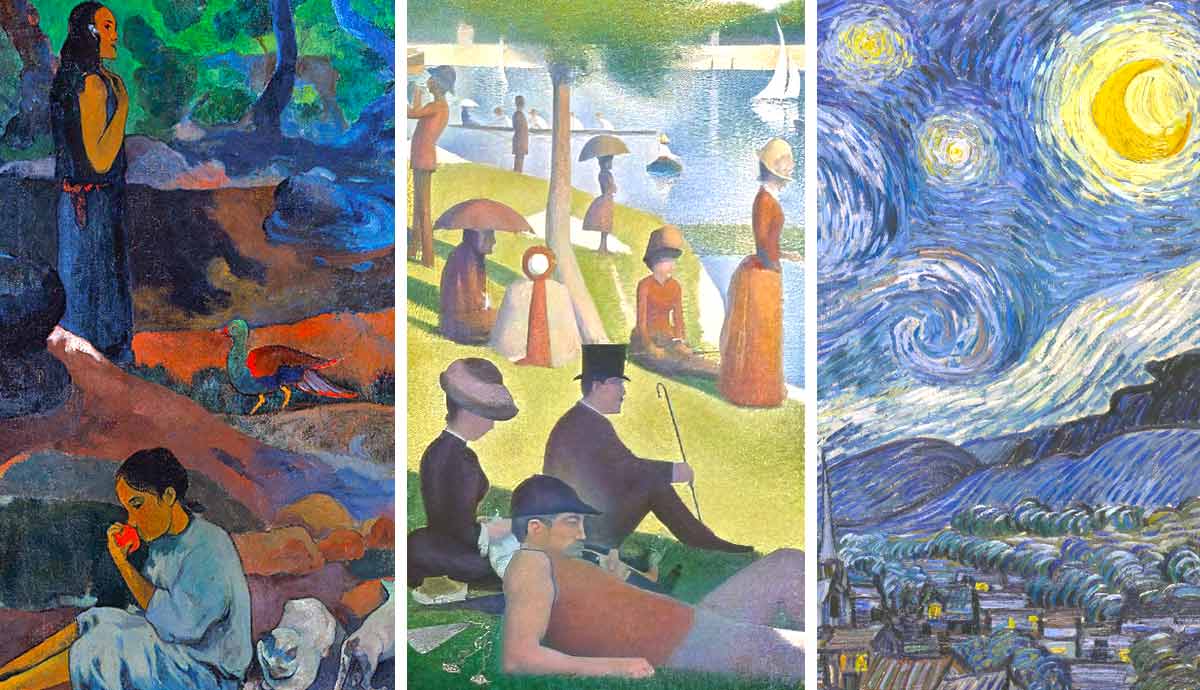
Gauguin, for instance, fled to Tahiti to paint lush, symbolic scenes that were a far cry from the Impressionists' realistic landscapes. Van Gogh, well, he's the guy who cut off his ear (long story), but he also created some of the most iconic paintings in art history, like "Starry Night" and "Sunflowers". Seurat, meanwhile, developed a technique called Pointillism, where tiny dots of pure color blend optically in the viewer's eye.
Practical Tip: Impressionism in Your Life
You don't need to be a painter to appreciate Impressionism. Next time you're out and about, try capturing the moment with your phone camera. Snap a pic of that beautiful sunset, or the bustling café scene. Then, use a photo editing app to enhance the colors and play with the brush tools. You're basically channeling your inner Monet!

Cultural References: Impressionism in Pop Culture
Impressionism has left its mark on pop culture, too. Remember the famous scene in "Titanic" where Jack sketches Rose? That's Impressionism in action. And who could forget the Impressionist-inspired opening credits of "The Great Gatsby" movie? Even the animated film "Ratatouille" pays homage to Impressionism with its vibrant, food-focused art direction.
Reflection: Art in Daily Life
So, what's the takeaway here? Impressionism and Post-Impressionism remind us to slow down, appreciate the beauty around us, and capture those fleeting moments. Whether you're a painter, a photographer, or just someone who loves a good sunset, these art movements have something to offer you. After all, art isn't just for museums; it's for living, breathing, experiencing every day.