
Why Did Renaissance Artists Favor Realism In Their Work

Why the Renaissance was All About Keeping It Real
Ever wondered why those old masterpieces you see in museums look so, well, real? Like, you could reach out and touch the folds of that fancy robe, or count the leaves on that tree? That's 'cause the artists of the Renaissance were all about this thing called realism, and they were really good at it.
So, What's the Big Deal About Realism?
Imagine you're at a party, and someone's trying to tell you a story. Would you rather they just say, "It was a dark and stormy night," or would you prefer they describe the lightning cracking like a whip, the rain pounding like a drum, and the wind howling like a wolf? Yeah, me too. That's what realism is like in art - it's like that vivid storyteller, but with paint and chisels instead of words.
Realism in art is all about capturing the world as it is, warts and all. It's about showing the texture of a fabric, the shine of an apple, the wrinkles on an old face. It's about making the viewer feel like they're right there in the scene, experiencing it firsthand.
Why the Renaissance? Why Not the Baroque or the Gothic?
Well, my friend, that's where things get interesting. You see, the Renaissance was this big, fancy party that Europe threw for itself after the Middle Ages. It was all about looking back to ancient Greece and Rome, learning from them, and trying to do even better. And one of the things they picked up from the ancient Greeks was this idea of mimesis, which is just a fancy word for 'imitation' or 'representation'.
But the Renaissance artists didn't just want to imitate the ancient masters. No, they wanted to outdo them. They wanted to make their art so realistic, so lifelike, that it would make you gasp and say, "Wow, how did they do that?"
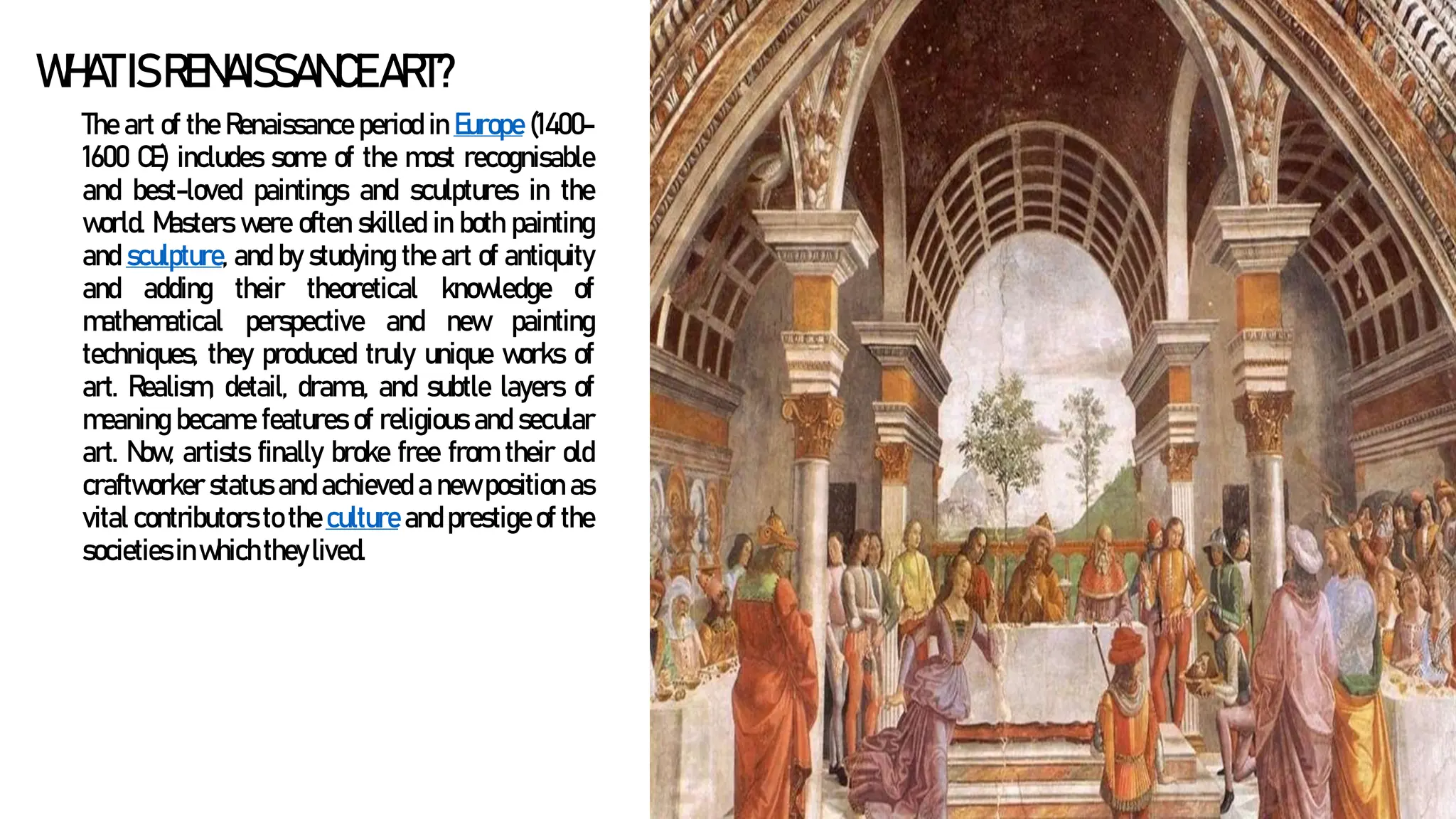
And so, they started studying the human body in detail. They started using linear perspective to make their paintings look like they were in 3D. They started using chiaroscuro to make their sculptures look like they were lit by a real, live sun. They were like the special effects guys of their time, but with paint and marble instead of CGI.
But Why Bother? What's the Point?
Great question! You might think, "Why go through all that trouble? Why not just paint a pretty picture and call it a day?" Well, for the Renaissance artists, it was about more than just making something look nice. It was about understanding the world around them, and communicating that understanding to others.
You see, by making their art so realistic, they were showing the world as it really was. They were showing the beauty in the everyday, the dignity in the common, the drama in the ordinary. They were saying, "Look, this is the world we live in. Isn't it amazing?"

So, Was It All Just About Showing Off?
Well, yeah, a little bit. I mean, let's be real, these guys were artists. They wanted to show off their skills, impress their patrons, and maybe even make a few coins while they were at it. But it was more than that too. It was about pushing the boundaries of what was possible. It was about challenging themselves and each other to keep getting better, keep learning, keep growing.
And you know what? They did it. They created some of the most iconic, most influential, most real art the world has ever seen. They started a movement that would change art forever. And all because they wanted to make their art look as real as life itself.
So next time you're at a museum, looking at a painting or a sculpture, remember the Renaissance artists. Remember how they looked at the world, how they saw the beauty in the everyday, and how they captured it all in their art. And then, maybe, you'll see the world a little differently too.