
How Do You Make Jewellery
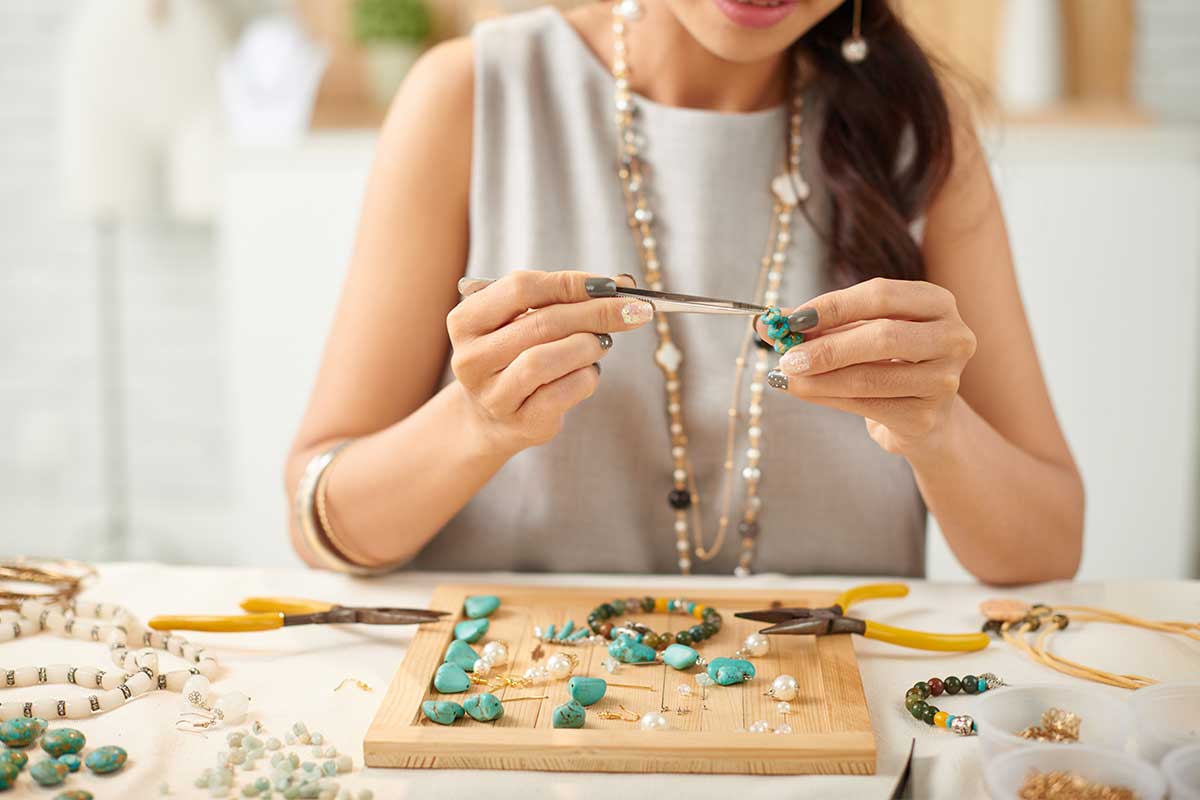
Stringing Together: A Jewellery-Making Journey
Ever wondered how that statement necklace you've been eyeing came to life? Or how about the delicate rings that grace your fingers? Welcome to the fascinating world of jewellery making, where art, craft, and a little bit of magic come together.
Tools of the Trade
First things first, you'll need a basic jewellery making kit. Think of it as your very own treasure chest, filled with essentials like pliers, wire cutters, a jewellery saw, and a variety of beads, stones, and metals. Don't forget the stringing material - wire, beading thread, or cord - depending on what you're creating.
Now, let's talk about the heart of the matter - the materials. You can go as simple or as elaborate as you like. From humble glass beads to precious gemstones, the world's your oyster. And if you're feeling eco-conscious, there are plenty of sustainable options out there too, like recycled metals and lab-created stones.
Must Read
Beads of Wisdom
Beads have been around since ancient times, with some of the earliest examples dating back to around 100,000 BC. They've been used for everything from currency to status symbols, and even as tools for healing and protection. Today, they're still as popular as ever, with a vast array of shapes, sizes, and materials to choose from.
But here's a little secret - you don't need a PhD in archaeology to string a beautiful bead necklace. Start with a simple pattern, like a basic string of round beads. Then, as your skills grow, you can branch out into more complex designs, like beaded bracelets with intricate patterns or multi-strand necklaces.
Metalwork Mastery
If you're feeling more metal than beady, you might want to try your hand at metalwork. This could be anything from shaping silver or gold into rings and pendants to creating intricate metal settings for stones.

One fun fact - did you know that gold is actually too soft to be used on its own in jewellery? That's why it's mixed with other metals to create different karats. Pure gold is 24 karat, but for everyday jewellery, 18 or 14 karat is more common.
Setting Stones
Speaking of stones, setting them securely in a metal setting is a skill in itself. But don't let that put you off - with a bit of practice and the right tools, you'll be creating stunning gemstone jewellery in no time.
And here's another fun fact - the process of cutting and polishing gemstones is called faceting. It's a bit like cutting a diamond, but with a lot more care and precision. Each facet reflects light in a different way, creating the gemstone's unique sparkle.

From Bench to Necklace
So, you've gathered your materials, learned your techniques, and now you're ready to create something truly unique. But where to start? Why not take inspiration from your surroundings? The natural world is a treasure trove of jewellery design ideas, from the delicate patterns of a seashell to the bold colours of a sunset.
Or maybe you're feeling more cultural. Jewellery has always been a reflection of the times, from the Art Deco styles of the 1920s to the bold, statement pieces of the 1980s. What's your era? What's your style?
Wear Your Story
At the end of the day, jewellery is more than just an accessory. It's a way to express yourself, to tell your story. It's the heirloom necklace passed down through generations, the bracelet bought on holiday, the ring that marks a special moment in time.
So go on, get creative. Make something that's uniquely you. And remember, every piece of jewellery has a story to tell - including the one you're about to create.