
How The Enigma Machine Works
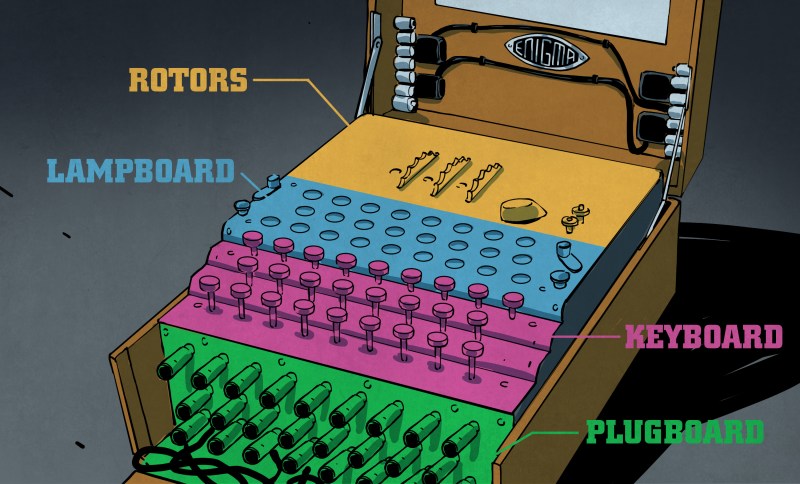
Ever wondered how spies in the 20th century kept their secrets safe? Enter the Enigma Machine, the ultimate code-cracking contraption that's equal parts genius and gimmick.
Meet the Enigma
Imagine a typewriter on steroids, with a side of Rube Goldberg. That's the Enigma Machine for you. It was born in Germany in the 1910s, but it's the World War II version that's the real showstopper.
Here's the kicker: it wasn't just one machine, but a whole family of them. There was the Enigma I, II, III, and even a naval version. Each one was like a unique snowflake, making it even trickier to crack their codes.
Must Read
How It Works: A Twist on Typing
So, how does this typing marvel encrypt messages? Well, it's all about those rotors, baby!
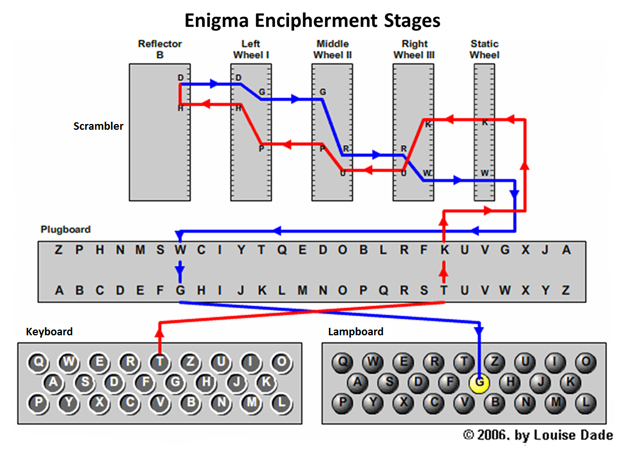
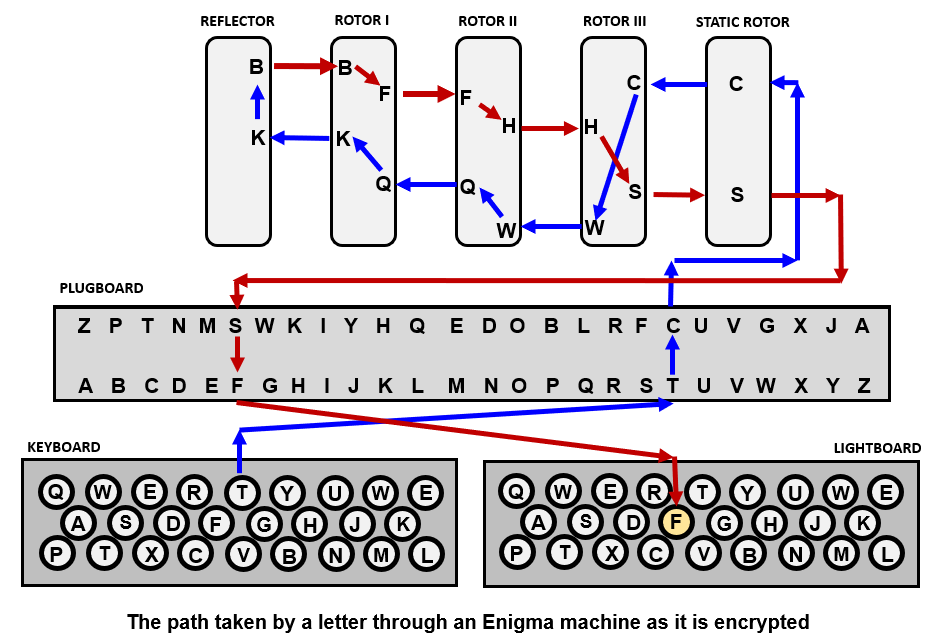
You've got your regular keyboard, but instead of typing out your message, you press a letter, and voilà, a different letter lights up. That's because the Enigma has these rotating wheels, or rotors, that scramble your message as you type.
But here's where it gets really crazy. Each rotor has a different wiring pattern, and they're all connected together. So, as you type, not only do the rotors spin, but they also reflect the signal back through the rotors again. It's like a message in a never-ending game of ping-pong.
Reflectors: The Secret Weapon
Now, you might think that's enough to keep messages safe, but the Enigma had one more trick up its sleeve: the reflector.
This bad boy sits at the end of the rotor line, bouncing the signal back through the rotors again. It's like the Enigma is daring you to crack its code, saying, "You'll never guess what I'm typing!"
Changing the Game: Plugboards and Steckerbretts
But wait, there's more! The Enigma also had plugboards, or Steckerbretts, that let operators swap letters before they even hit the rotors. It was like a secret handshake between the Enigma and its users.
And get this: the plugboard settings and rotor positions could change every day. Talk about a moving target!
The Enigma's Weakness: A Human Touch
Despite all its tricks, the Enigma wasn't entirely invincible. Its weakness? Human nature.
You see, the Germans used the Enigma so much that they started to repeat patterns. And when you're dealing with a machine that's this complex, even the tiniest pattern can be a goldmine for codebreakers.
Plus, the Germans had a habit of sending messages that started with "Heil Hitler" - talk about a giveaway!
Cracking the Code: The Enigma's Downfall
Enter the Bombe, the machine built to break the Enigma. It was like the Enigma's arch-nemesis, using trial and error to test every possible rotor position and plugboard setting.
The Bombe was the brainchild of Alan Turing and his team at Bletchley Park. They worked tirelessly, turning the tide of the war one encrypted message at a time.
And the rest, as they say, is history. The Enigma's codes were cracked, and the Allies got the upper hand in the war. All thanks to a bit of clever engineering and a whole lot of perseverance.
Enigma Today: A Pop Culture Icon
These days, the Enigma Machine is more than just a historical artifact. It's a pop culture icon, starring in movies like "The Imitation Game" and "Enigma".
And if you're feeling nostalgic, you can even buy your own Enigma replica. Just don't expect it to send secret messages - unless you count "I love you" in Morse code.
So there you have it: the Enigma Machine, the typing marvel that changed the course of history. It's a reminder that even in the darkest times, a little ingenuity can go a long way.