
How To Get Totals On Excel

Alright, gather 'round, folks. We're about to tackle a topic that's as old as spreadsheets themselves - getting those nifty little totals in Excel. Now, I know what you're thinking, "Oh boy, here we go again, more tech jargon." But hold your horses, this is gonna be as painless as a root canal with a good dentist. Promise.
Why Bother with Totals?
Imagine you're at the supermarket, and you've got a list as long as your arm. You've got apples, bananas, oranges, and enough chicken to feed a small army. Now, you could keep tallying each item in your head, but let's face it, by the time you reach the checkout, you'd have lost count and ended up with a cart full of who knows what.
Totals in Excel are like that little notepad you'd use to scribble down your grocery list. They help you keep track of numbers, add them up, and make sense of it all. So, whether you're budgeting for your next holiday, tracking your spending, or just want to know how many times your boss said "Let's circle back to this" in a meeting, totals are your new best friend.
Must Read
Meet SUM, Your New Best Friend
Now, let's introduce you to the star of our show - the SUM function. Think of it as the cashier at the supermarket, adding up all your items and giving you a nice, neat total. In Excel, it's the function that does just that. It takes a range of cells (that's just a fancy way of saying a group of cells) and adds them up.
Here's how you do it. Let's say you've got a list of numbers in cells A1 to A5. You want to find the total, so you type "=SUM(A1:A5)" in a cell where you want the total to appear. Press enter, and voila! Your total appears like magic.
But wait, what if you want to add numbers from different cells? No problemo. Let's say you've got another list in cells B1 to B5. You can add them to your total by separating the ranges with a comma. So, you'd type "=SUM(A1:A5, B1:B5)". Easy peasy, right?
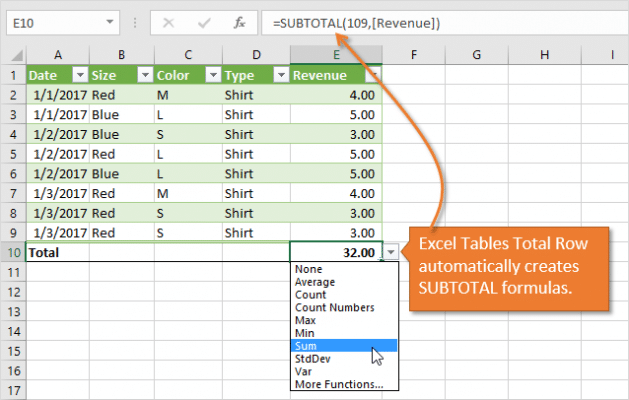
Automatic Totals: The Lazy Person's Dream
Now, if you're anything like me, you hate having to update your totals every time you add a new number. Well, Excel has a nifty little feature just for us lazy folks - automatic totals.
Here's how you do it. Select the range of cells you want to add up. Then, click on the 'Home' tab in the ribbon. See that little button that says 'AutoSum'? Click on that. Excel will automatically insert the SUM function in the cell below your selection, ready for you to press enter. Magic, I tell ya!
But wait, what if you want your total to update automatically every time you add a new number? That's where 'Absolute References' come in. Instead of typing "=SUM(A1:A5)", you'd type "=SUM($A$1:$A$5)". The dollar signs tell Excel to always add up the numbers in that range, no matter what. Clever, huh?
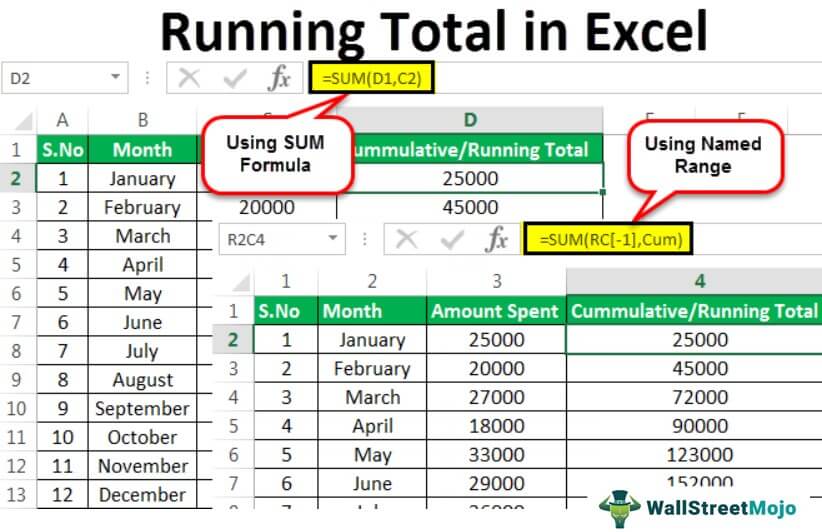
Subtotals: The Party Trick You Never Knew You Needed
Alright, let's say you've got a big ol' list of numbers, and you want to add them up in groups. Like, maybe you've got sales figures for each region, and you want to see the total for each region, as well as the grand total. That's where subtotals come in.
Select your data, then click on the 'Data' tab in the ribbon. See that little button that says 'Subtotal'? Click on that. Excel will add up your numbers for each group, and give you a grand total at the end. And the best part? It does it all in a fraction of the time it would take you to do it by hand. Now that's what I call a party trick!
And That's a Wrap!
And there you have it, folks. We've gone from supermarket shopping to party tricks, all in the name of understanding totals in Excel. So, the next time you're staring at a spreadsheet, wondering how on earth you're going to add up all those numbers, just remember - you've got this. You're a total pro now!
Now, if you'll excuse me, I've got some groceries to buy. And this time, I'm taking my Excel skills with me. After all, every little bit helps, right?