
How To Identify Vintage Furniture

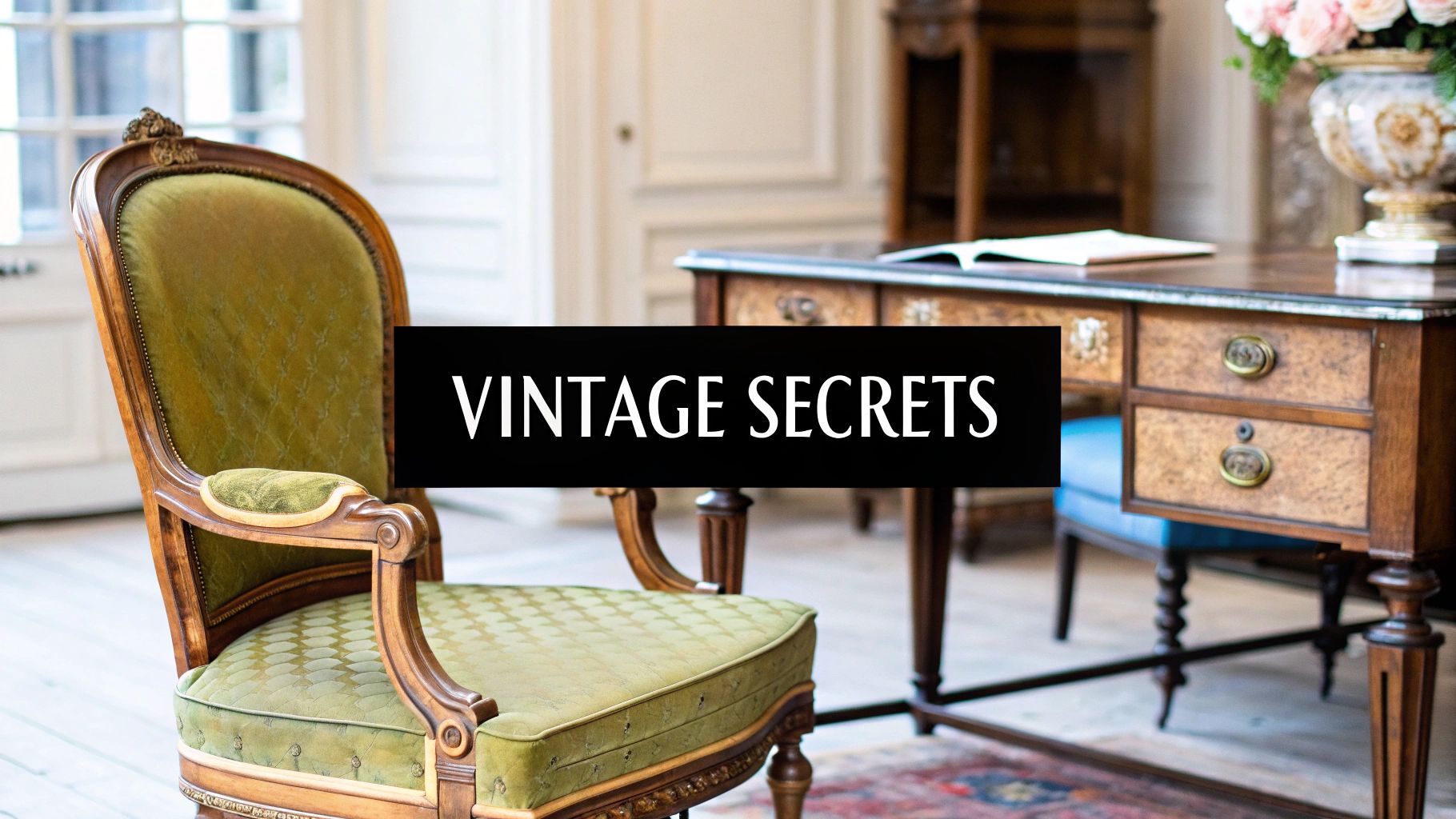
So, you've stumbled upon a dusty old chair at a flea market and you're wondering, "Is this thing vintage or just plain old?" Well, grab a coffee, pull up a chair (not that one, yet), and let's chat about how to identify vintage furniture.
First Things First: What's Vintage?
Vintage isn't just about being old, it's about being old in a cool way. Generally, we're talking about pieces from the 1920s to the 1970s. Before that, it's antique, and after, it's just... old.
Know Your Styles
Furniture from different eras has its own vibe. Art Deco is all about geometric shapes and bold colors (think The Great Gatsby). Mid-Century Modern is sleek and simple, with a lot of wood and clean lines (think Mad Men). And Retro is, well, retro - think bright colors and funky patterns (think Austin Powers).
Must Read
So, when you're looking at that chair, ask yourself: "Does this look like something Don Draper would sit on, or more like something Austin Powers would, uh, 'sit' on?"
Materials Matter
Back in the day, people used real wood, not particle board. So, look for solid wood, like oak, maple, or walnut. Check the legs, the back, and the underside of the seat. If it's wood all the way down, you're off to a good start.
Also, keep an eye out for original finishes. A lot of vintage pieces have a patina - that's just a fancy word for 'well-loved look' - that you can't replicate with new furniture. If it's got a gorgeous, worn-in look, that's a good sign.

Hardware Hints
Check the hardware - knobs, pulls, hinges, that sort of thing. If it's got a unique design or looks handmade, that's a good sign. And if it's got a maker's mark or a patent date, even better!
And hey, don't be afraid to get your hands dirty. Give that hardware a gentle tug. If it's loose or wobbly, it might be a replacement. But if it's solid and secure, that's a good sign the piece is original.
Labels and Marks
Look for labels or maker's marks. These can tell you a lot about a piece. Some brands, like Herman Miller or Knoll, are instantly recognizable. Others might be less familiar, but still valuable.
And don't forget to check the underside of the seat. A lot of vintage pieces have labels there. If you find one, snap a pic and do a quick internet search. You might be surprised what you find!
Trust Your Gut
Finally, trust your instincts. If something feels right, it probably is. And if it feels... off, it probably is too. Vintage furniture should have character, but it shouldn't be a chore to use.
So, go forth, vintage hunters! With a little knowledge and a lot of curiosity, you'll be spotting vintage gems in no time. Just remember: when in doubt, ask the seller. They might know more than they let on. And hey, if they try to charge you an arm and a leg, just smile and walk away. There's always another flea market around the corner.
Happy hunting!