
Self Portrait - Edvard Munch
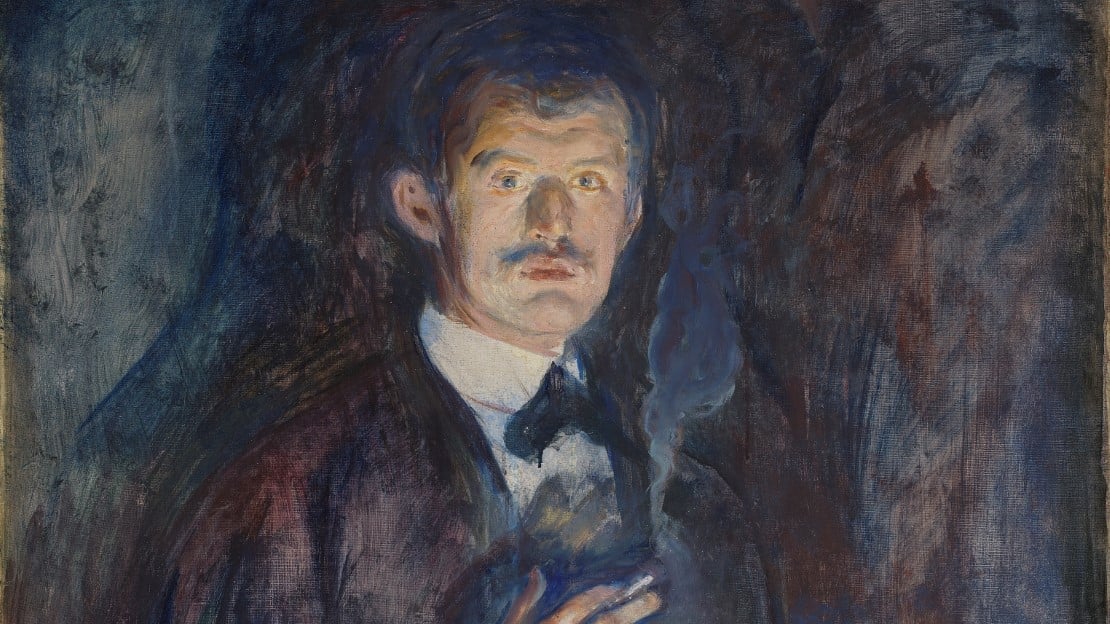
Ever Stared at a Painting and Felt Like It's Staring Back?
Picture this: You're wandering through an art gallery, minding your own business, when suddenly, a pair of eyes catches your gaze. You look up, and there it is - a self-portrait that seems to be staring right through you. It's a bit unnerving, isn't it? That's exactly what Edvard Munch's Self-Portrait from 1895 does. Let's dive into this eerie masterpiece, shall we?
Meet Edvard Munch
Now, before we get too deep into this selfie (yes, they've been around longer than you think!), let's talk about the artist. Edvard Munch was a Norwegian painter who lived from 1863 to 1944. He's known for his unique style and his fascination with themes like anxiety, love, and death. His work is often associated with the Symbolist movement, which was all about using symbols and allegory to express complex ideas.
So, What's the Deal with This Self-Portrait?
Munch painted this self-portrait during a time of personal turmoil. He was struggling with mental health issues, and this piece is often seen as a reflection of his inner turmoil. But here's the thing: it's not just a snapshot of a moment in time. It's a symbol. Munch once said, "I don't know what's worse: to be or not to be." This self-portrait, with its haunting eyes and stark contrast, seems to embody that existential angst.
The Eyes Have It
Those eyes, right? They're the first thing you notice. They're not just eyes; they're a symbol. Munch uses them to convey his inner turmoil. They seem to stare right into your soul, don't they? It's like Munch is inviting you to look deep into his psyche, to understand his pain. It's intense, isn't it?
Color Me Impressed
Now, let's talk color. Or rather, lack thereof. This self-portrait is mostly in shades of brown and black, with just a hint of blue. It's not exactly a cheerful palette, is it? Munch uses this limited color scheme to create a sense of isolation and despair. It's like he's saying, "This is my world, and it's not a very happy place."

Why Does This Matter?
You might be thinking, "This is all well and good, but why should I care about some old painting?" Well, friend, art has a way of making us confront our own feelings. Munch's self-portrait doesn't shy away from the darkness. It stares it right in the face. And in doing so, it invites us to do the same. It's a reminder that it's okay to feel anxious, to feel alone, to feel lost. And it's a reminder that art can be a powerful tool for expressing and understanding those feelings.
So, What Do You Think?
Have you ever stood before a piece of art and felt like it was speaking directly to you? Like it was telling your story? That's the power of art, my friend. It's not just about pretty pictures. It's about connection, about understanding, about feeling. So, the next time you find yourself in front of a self-portrait, give it a moment. Look into its eyes. You might just find a kindred spirit.