
Silver Hallmarks And Makers Marks

Ever stumbled upon a shiny trinket at a flea market and wondered, "Is this the real deal or just a clever fake?" Well, friend, let me introduce you to the world of silver hallmarks and maker's marks – your secret weapons for unmasking the true identity of your metallic treasures!
What's the Deal with Hallmarks?
Imagine hallmarks as the silver world's version of a celebrity's autograph. They're tiny symbols stamped onto precious metals, like silver, to tell us where, when, and who made it. Pretty nifty, huh?
Now, let's dive into the fascinating world of these little marks. Grab a magnifying glass and let's get started!
Must Read
Meet the Hallmark Squad
Each hallmark has a story to tell, and they're not shy about it. Here are the main players:
- Assay Office Mark: This is like the silver's birth certificate, telling us where it was tested and stamped with its purity.
- Date Letter: Just like your birthday, silver has a date mark too! This one tells us the year it was made.
- Duty Mark: Before the 19th century, silver was taxed based on its weight. This mark tells us if that tax has been paid.
- Maker's Mark: This is the silver's unique fingerprint, telling us who made it. More on that later!
Purity: The Silver Standard
Silver hallmarks often start with a symbol representing the metal's purity. In the UK, for example, you'll see a lion passant for sterling silver (92.5% pure). But watch out for fakes – some clever forgers use a 'pseudo-lion' with a longer tail to fool the untrained eye!
In other parts of the world, you'll find different symbols. In the US, for instance, look for '925' or '999' to ensure you're dealing with sterling or fine silver, respectively.
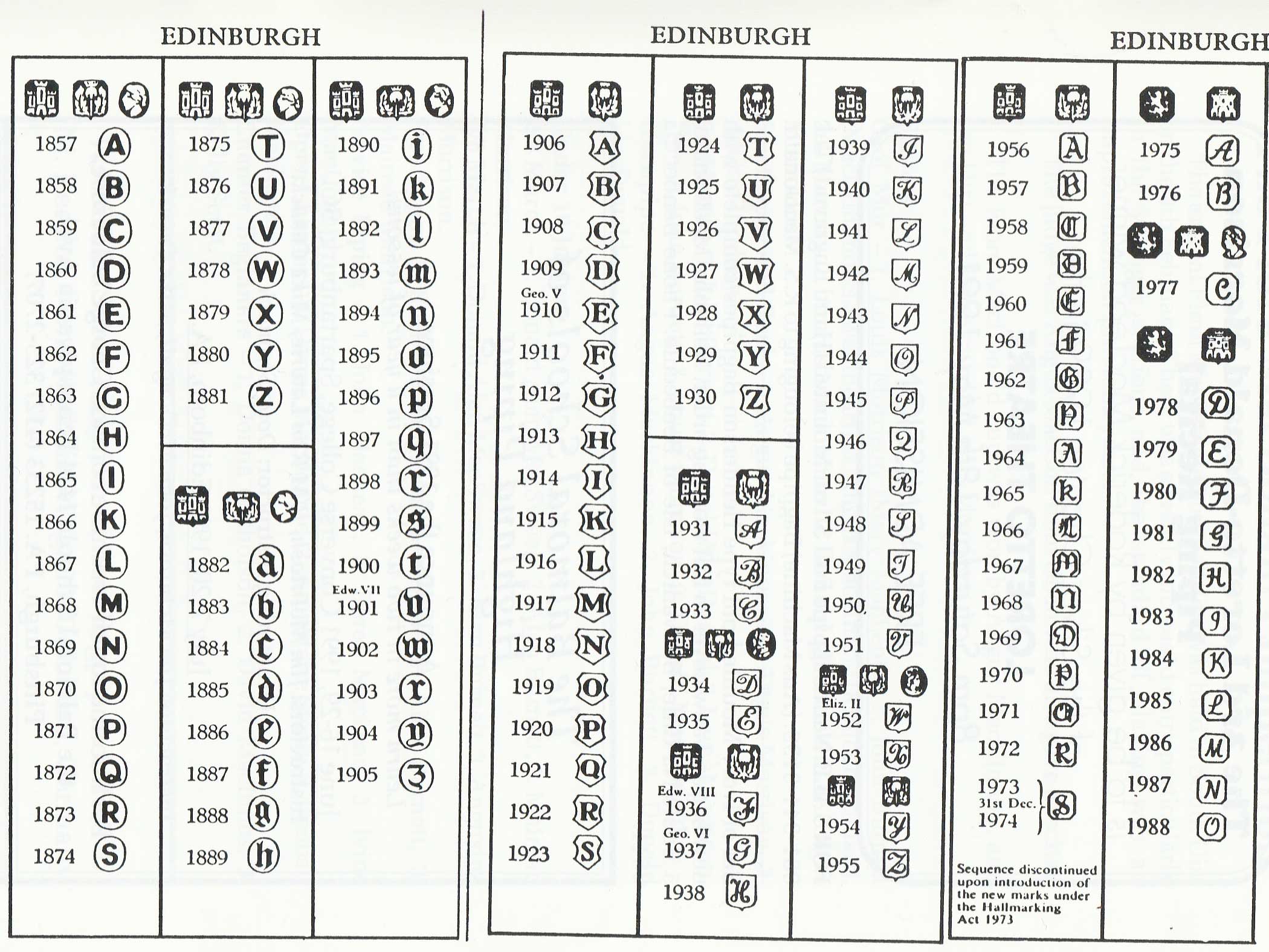
Maker's Marks: The Silver Whisperers
Now, let's talk about those maker's marks. These tiny symbols are like secret handshakes between silversmiths and their creations. Each one is unique to the maker or company, and they can tell us a whole lot about our shiny new friend.
Some maker's marks are easy to decipher. Take, for example, the 'B' and 'S' marks found on many antique pieces. These belong to the renowned silversmiths Paul Storr and John Samuel Hunt – their work commands high prices at auctions today!
Other marks, however, can be as cryptic as a riddle from an ancient sage. But that's part of the fun, right? Decoding these marks can be like playing a real-life game of Clue, leading you on a treasure hunt through history.

Quirky Marks and Fun Facts
Some maker's marks are downright quirky. Take the mark of 'I.H.' – it belongs to silversmith Isaac Harris, who was also a rabbi! Or how about the mark of 'A.B.' – that's none other than Abraham Lincoln's father, who was a skilled silversmith himself!
And here's a fun fact for you: Did you know that Queen Victoria had her own maker's mark? It's a 'V' with a crown above it. So, if you ever come across a piece with that mark, you'll know you've found a true royal treasure!
So, How Do You Read These Marks?
Reading hallmarks and maker's marks might seem daunting at first, but don't worry – it's a skill that improves with practice. Start by familiarizing yourself with the common marks in your region. Then, when you're ready to dive deeper, consider investing in a good reference book or app.
And remember, friend, every mark tells a story. So, grab your magnifying glass, put on your detective hat, and get ready to unlock the secrets of your silver treasures!