
The Dance Class Edgar Degas
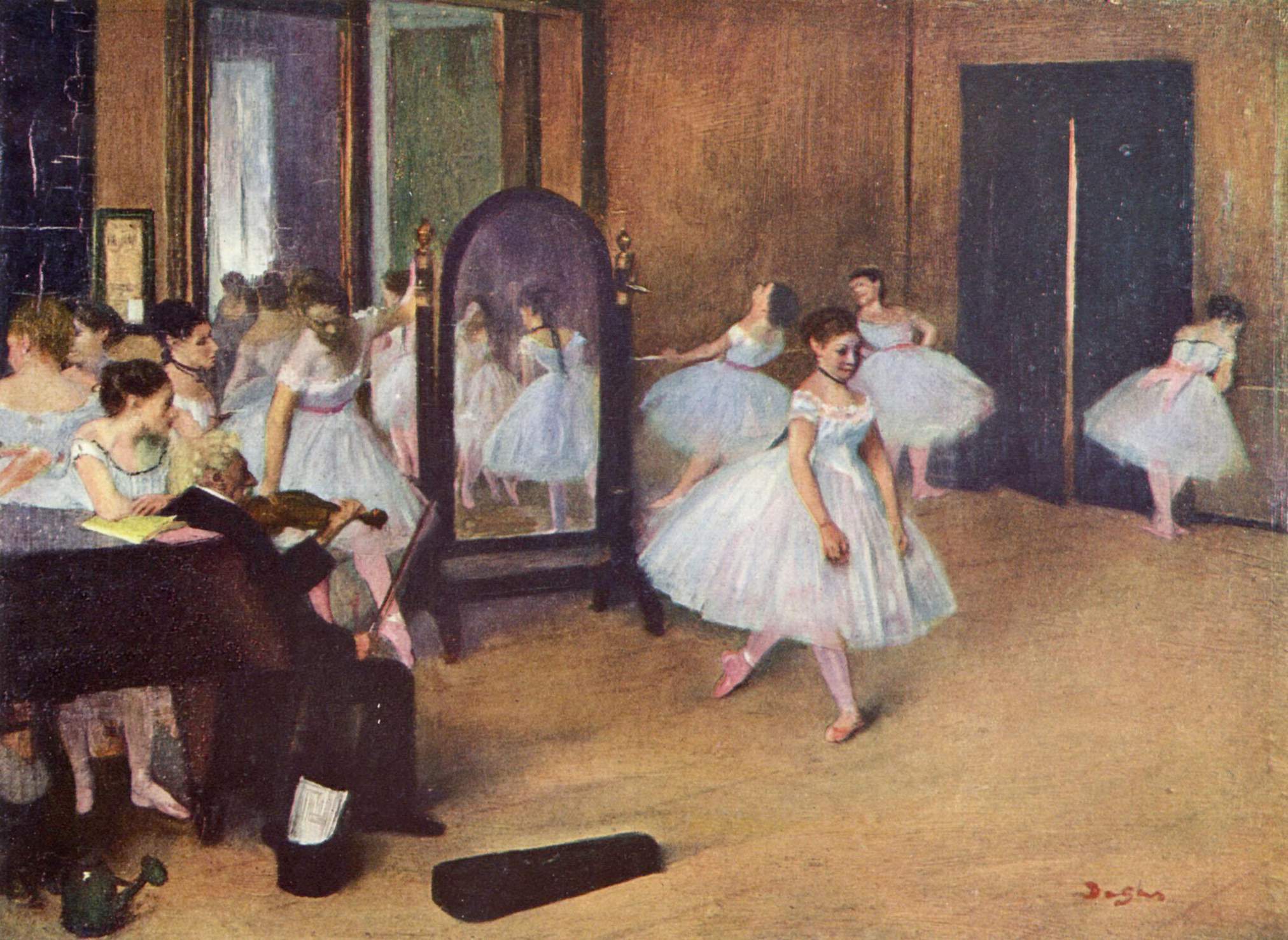
Stepping into the Studio: The Dance Class by Edgar Degas
Ever wondered what it's like to step into the world of a late 19th-century Parisian dance studio? Thanks to French artist Edgar Degas, we can. Degas, a master of Impressionism, was known for his captivating depictions of dancers, and one of his most renowned works, The Dance Class, offers us a glimpse into this world.
Completed around 1871-74, this pastel and charcoal masterpiece is housed at the Musée d'Orsay in Paris. It's a scene that's both intimate and dynamic, capturing a moment in time with a sense of immediacy that's almost cinematic. Degas was a master of composition, and in this piece, he uses an unconventional angle, looking down on the scene from above, to create a sense of movement and energy.
Degas' Dance Obsession
Degas was fascinated by dance, and it showed up frequently in his work. He was a regular at the Paris Opera Ballet, sketching and taking notes during rehearsals. His interest wasn't just aesthetic; he was captivated by the technical aspects of dance, often drawing and painting the same poses and movements over and over to capture their essence.
Must Read
In The Dance Class, Degas captures a moment of instruction. The young dancers, dressed in their practice clothes, are mid-movement, their bodies twisted and stretched in various poses. The instructor, a mature dancer, stands at the front, demonstrating the next step. It's a snapshot of a fleeting moment, a testament to Degas' ability to capture the ephemeral.
Practical Tips from a Master
Degas' work offers more than just aesthetic pleasure; it's a masterclass in composition and technique. Here are a few tips we can take from The Dance Class:

- Experiment with angles: Degas' bird's-eye view is a great example of how changing your perspective can bring new life to a scene.
- Capture movement: Degas wasn't just painting dancers, he was painting dance. Look for ways to convey motion in your work, whether it's through lines, shapes, or composition.
- Study your subject: Degas' deep understanding of dance is evident in his work. Whether it's dance, music, or something else, immersing yourself in your subject matter can elevate your art.
Fun Facts and Cultural References
Did you know that Degas was also a passionate photographer? He saw photography as a tool to study movement and composition, and his photographs often served as inspiration for his paintings and sculptures.
And speaking of sculpture, Degas was also a skilled sculptor. While he didn't exhibit his sculptures during his lifetime, they're now recognized as an important part of his oeuvre. His sculptures of dancers, like his paintings, capture a sense of movement and energy.

If you're interested in seeing The Dance Class in person, you'll find it at the Musée d'Orsay in Paris. But if you can't make it to France, don't worry. There are plenty of high-resolution images of the piece available online. You can even find step-by-step drawing tutorials inspired by Degas' work.
Reflection: Dance in Daily Life
Degas' dance paintings remind us that art can be found in the most ordinary of moments. Whether it's the grace of a dancer, the rhythm of a musician, or the harmony of a well-designed space, there's beauty all around us, waiting to be captured and appreciated.
So, the next time you find yourself in a dance class, a concert, or even just walking down the street, take a moment to look around. What's the story in this scene? How can you capture its essence? After all, as Degas showed us, every moment is a potential masterpiece.