
The Night Watch Rembrandt Van Rijn
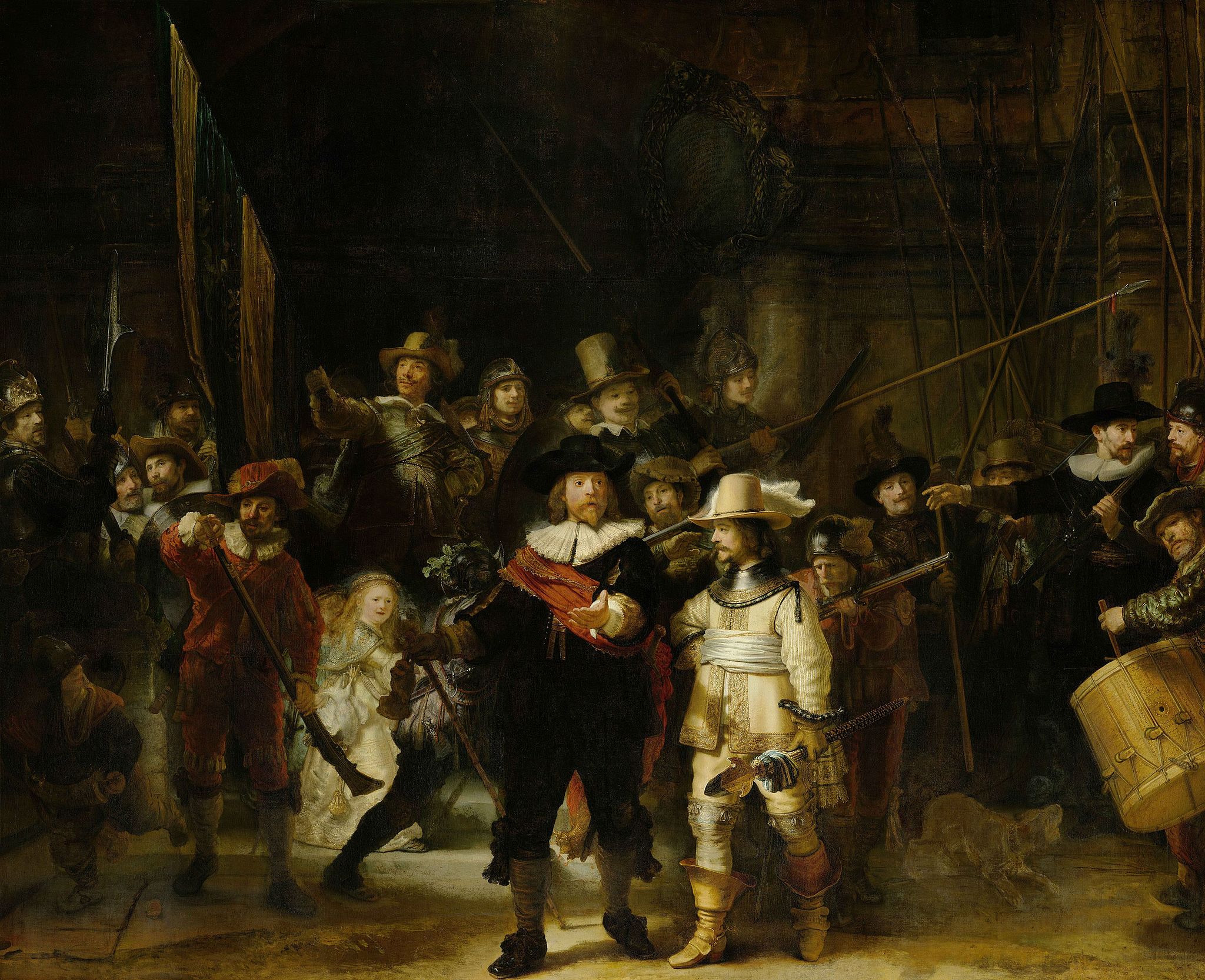
So, there I was, wandering through the Rijksmuseum, trying to look all artsy and cultured, when I found myself face to face with this massive painting. I mean, it was like walking into a wall of history. I'm talking about Rembrandt's "The Night Watch", of course. Now, I've seen my fair share of paintings, but this one, it's something else.
Meet the Masterpiece
First things first, let's talk about the size of this thing. It's huge! Over 11 feet tall and nearly 15 feet wide. It's like Rembrandt was saying, "Hey, if you're gonna do something, do it big!" And he wasn't just talking about the size, he was talking about the story too.
Now, you might be thinking, "What's the big deal? It's just a bunch of people standing around." But hold on, because this isn't just any group of people. This is a militia company, the "Night Watch", and they're ready for action. Well, most of them are. Some of them seem to be more interested in showing off their fancy clothes than anything else. But more on that later.
Must Read
Rembrandt's Trick
Here's where Rembrandt gets clever. He's painted this massive scene, but he's not just showing us a bunch of people standing around. No, he's telling a story. He's using light and shadow to draw our eyes in, to make us look closer. It's like he's saying, "Come on in, take a look around, there's more going on here than meets the eye."
And boy, is there ever. There are over 30 figures in this painting, and each one is a character in Rembrandt's story. Some are looking at us, the viewers, some are looking at each other, some are looking off into the distance. It's like a game of "Where's Waldo", but with 30 Waldos and no striped shirts.
Who's Who in the Night Watch
So, who are these people? Well, the guy in the center, the one with the big hat and the even bigger ego, that's Captain Frans Banninck Cocq. He's the one leading the charge, or at least he thinks he is. He's so busy showing off his fancy clothes and his big hat that he doesn't seem to notice that his company is more interested in their own little dramas than in following his orders.

Then there's the guy on the left, the one with the big drum. He's the one really leading the charge. He's the one giving the orders, he's the one the others are looking to. But he's not the one getting all the attention. That's Rembrandt for you, always subverting expectations.
And then there's the dog. Yes, the dog. You can't miss it, it's right there in the middle of everything. Some people think it's a symbol of loyalty, others think it's a symbol of chaos. Me? I think it's just a dog. But that's the thing about art, isn't it? It's open to interpretation.
Rembrandt's Masterstroke
Now, here's where we get to the really clever part. You know how I said Rembrandt was using light and shadow to draw us in? Well, it turns out, he was also using it to hide something. Or rather, someone. If you look closely, you'll notice that there's a figure in the shadows, half-hidden, looking out at us. It's Rembrandt himself.

That's right, Rembrandt painted himself into his own painting. But he didn't just paint himself in, he hid himself in the shadows. It's like he's saying, "I'm here, but I'm not here. I'm the one telling this story, but I'm not the star of it." It's a masterstroke, a clever little trick that makes you look twice, think twice.
Why "The Night Watch" Matters
So, why does any of this matter? Well, for one thing, it's a great story. It's a story about power and leadership, about how sometimes the people in charge aren't the ones really calling the shots. It's a story about how even in a big, crowded scene, there's always room for individuality, for personal drama.
But it's also a story about art, about how it can trick us, surprise us, make us look twice. It's a story about how a painting can be a window into the past, a way to see how people lived, thought, felt. It's a story about how art can make us think, make us feel, make us see the world in a new way.
And that, my friends, is why "The Night Watch" matters. It's not just a big painting of a bunch of people standing around. It's a story, a trick, a masterstroke. It's a reason to slow down, to look closer, to think deeper. It's a reason to wander through the Rijksmuseum, to find yourself face to face with history, to see the world through Rembrandt's eyes.