
What Is A Lithograph In Art

Alright, gather 'round, folks. I've got a tale to tell about a little something called a lithograph. Now, don't go rolling your eyes, thinking I'm about to bore you with some stuffy art history lecture. No, no, no. This is a story about how a flat stone can become your new best friend in the art world. So, grab a coffee, get comfy, and let's dive in.
Once Upon a Time in Germany...
Picture this: it's the late 1700s, and we're in Germany. A fella named Alois Senefelder is sitting around, probably trying to figure out how to make his playwriting career take off. But instead, he stumbles upon something that would change the art world forever. You know, as you do.
So, Senefelder's got this idea to write his plays on stones using a special chemical process. Why? Well, because he's a bit of a rebel and wants to avoid the high costs of traditional printing methods. Little did he know, he was about to invent something way cooler than any play.
Must Read
Enter: The Lithograph
Now, Senefelder starts playing around with this stone printing business, and boom! He realizes he can create images, not just text. And thus, the lithograph was born. The name comes from the Greek words 'lithos' (stone) and 'graphis' (writing). Fancy, huh?
But here's where it gets even more interesting. See, with a lithograph, you can create these beautiful, detailed images using nothing but a pencil and some special ink. And the best part? You can make as many copies as your heart desires. It's like magic, but with less wand-waving and more stone-rubbing.
How Does It Work?
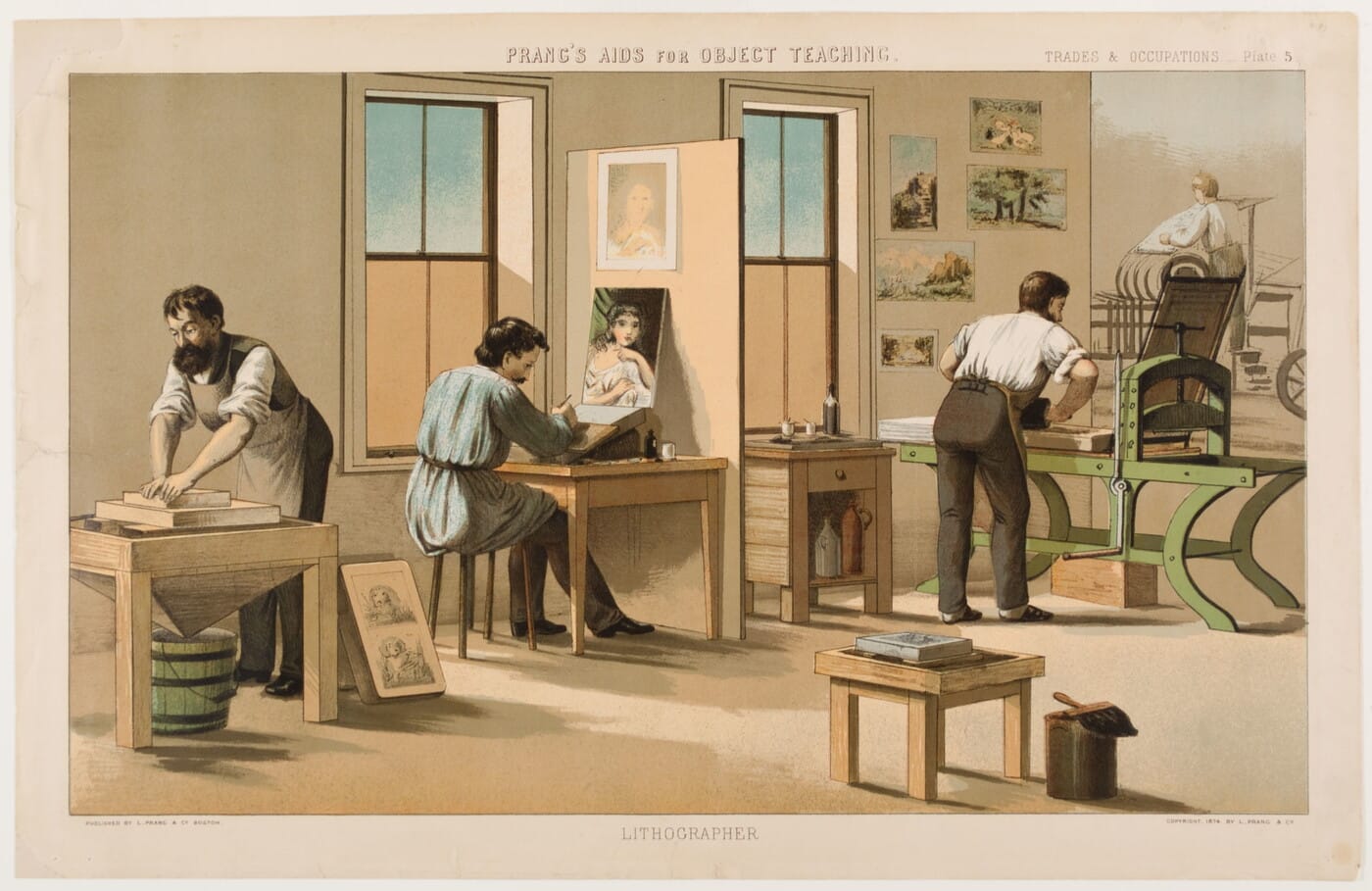
Alright, so here's the science bit. You take your flat stone - limestone is the usual choice - and draw your masterpiece on it using a greasy pencil. Then, you apply a special chemical solution that makes the non-greasy parts of the stone receptive to ink. Rinse and repeat with ink and paper, and voila! You've got yourself a lithograph.
But here's where it gets really cool. Because the stone can be reused, you can make changes to your image between prints. Want to add a mustache to your portrait? No problem! Just rub it out and draw it back in. It's like having an erasable canvas, but with way more elbow grease involved.
Lithographs Through the Ages
Now, you might be thinking, "That's all well and good, but why should I care about some old stone printing method?" Well, let me tell you, lithography has been a game-changer in the art world. It's been around for over 200 years, and it's still going strong today.
In the 19th century, lithographs were all the rage. Artists like Goya, Daumier, and even the great master of suspense, Edgar Allan Poe, were using this technique to create stunning images. And let's not forget about those beautiful, colorful posters from the Art Nouveau era. You know the ones - they've probably graced the walls of your local café at some point.
But lithography hasn't just been about art. It's also played a huge role in mass production, from posters and maps to currency and comic books. In fact, chances are, you've interacted with a lithograph today without even realizing it. Scary, huh?
Lithographs in the Digital Age
Now, you might be wondering, "With all these fancy new printing methods, why bother with lithography?" Well, my friend, there's something special about a lithograph that just can't be replicated with a digital printer. It's all about the texture, the history, the fact that someone actually touched that stone with their own greasy hands.

Plus, there's a certain charm to the fact that lithography is still a very hands-on process. It's like cooking - sure, you could use a microwave, but where's the fun in that? Give me a wood-fired oven and a few hours of my life any day.
So, What's It All Mean?
At the end of the day, a lithograph is more than just a print. It's a piece of history, a testament to the power of creativity and ingenuity. It's a reminder that sometimes, the simplest ideas can have the biggest impacts. And it's a darn good excuse to play around with some ink and a stone.
So next time you're at an art gallery or flipping through a book, keep an eye out for those little 'lithograph' labels. You might just find yourself looking at a piece of art that's a little bit magical, a little bit historical, and a whole lot of fun.
And who knows? Maybe one day, you'll find yourself with a greasy pencil and a flat stone, ready to make some art history of your own. Just remember to wash your hands afterwards. Greasy pencils are a messy business.