
What Is An Abstract Expressionist

So, you're curious about Abstract Expressionism, huh? Let's dive in, grab a coffee, and chat about it like we're old pals.
What's the Deal with Abstract Expressionism?
Imagine you're at an art gallery, and you see a painting that looks like a toddler threw some paint at a canvas and called it a day. You might think, "What on earth is this?" Well, my friend, you might be looking at an Abstract Expressionist masterpiece.
Now, before you roll your eyes and say, "Oh great, another fancy term for 'I don't get it,'" let me stop you right there. Abstract Expressionism is actually a pretty fascinating art movement that emerged in the mid-20th century, right here in the good ol' US of A.
Must Read
So, What's the Big Idea?
Abstract Expressionism is like the art world's version of a wild, experimental jam session. You've got two main types: Abstract and Expressionist. Abstract artists like to play around with shapes, colors, and lines, but they don't care much for representing real-life objects. They're more into creating a mood or feeling. Expressionists, on the other hand, are all about emotions and personal expression. They might use recognizable forms, but they twist and distort them to convey their feelings.
Think of it like this: Abstract artists are the ones who say, "Forget about painting a pretty sunset. Let's see what happens when we throw some red and orange on a canvas and let it drip!" Expressionists are the ones who say, "I'm feeling all sorts of emotions right now, and I'm going to pour them onto this canvas, even if it doesn't look like anything you've seen before."
Who Were These Wild and Crazy Artists?
Some of the most famous Abstract Expressionists were a bunch of New York-based artists who became known as the New York School. Ever heard of Jackson Pollock? He's the guy who made those famous "drip paintings." He'd pour paint onto a canvas laid out on the floor and then dance around it, flicking and dripping paint like he was conducting an orchestra.
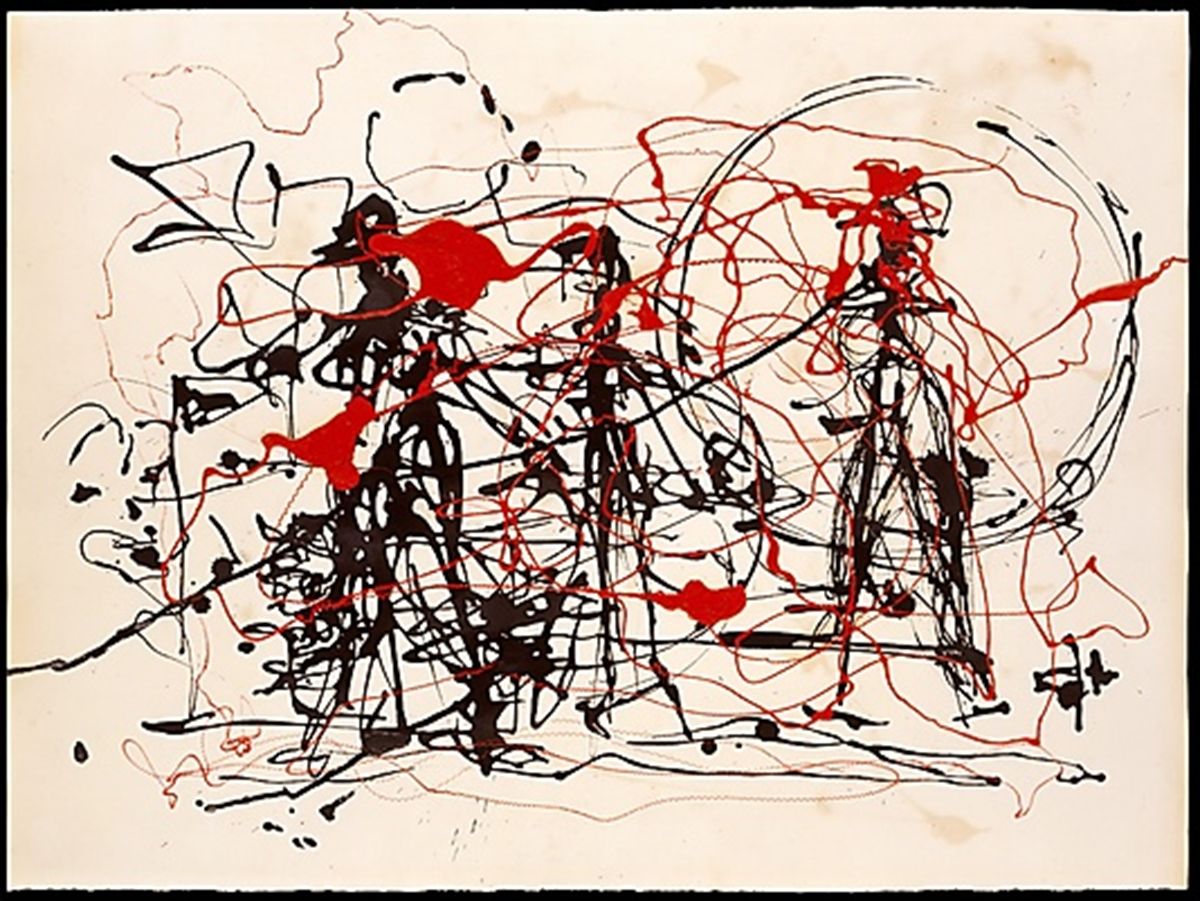
Then there was Mark Rothko, who created those big, colorful rectangles that seem to float on the canvas. He once said, "I'm interested only in expressing basic human emotions - tragedy, ecstasy, doom, and so on." Willem de Kooning was another big name. He worked with both abstract and figurative elements, creating these wild, energetic paintings that seem to vibrate with energy.
But Why All the Drama?
Abstract Expressionism was a response to what was happening in the art world at the time. After World War II, European art was in a bit of a crisis. Artists were looking for new ways to express themselves and their experiences. Abstract Expressionism was their way of saying, "Screw the rules! Let's do something completely new and different."
Plus, let's not forget that these artists were living and working in post-war America. The world was changing fast, and they wanted their art to reflect that. They were dealing with big, heavy topics like existentialism, the nuclear age, and the human condition. It's no wonder their art can feel intense and emotional!

So, Should I Try to Understand It?
Here's the thing: Abstract Expressionism isn't always easy to understand or appreciate. It can be confusing, frustrating, even infuriating at times. But that's kind of the point. These artists wanted to challenge us, to make us think, to feel something deep down in our guts.
So, the next time you find yourself standing in front of an Abstract Expressionist painting, scratching your head and wondering, "What am I supposed to be looking at here?" just remember: That's okay. It's not about finding the "right" answer. It's about having an experience, connecting with something bigger than yourself, and maybe even learning a little something about the human condition along the way.
And who knows? You might just find that you love it. After all, everyone's got their own taste, right? So, grab another coffee, take your time, and enjoy the ride. That's what art's all about.