
What Materials Did Pablo Picasso Use
Hey there, art enthusiasts and curious minds! Today, we're diving into the vibrant world of Pablo Picasso, the master of modern art, and exploring the materials he used to create his iconic masterpieces. So, grab your beret, let's get started!
Colours, Colours Everywhere!
Picasso was a man who loved his colours. He used them like a magician uses his wand, creating worlds of wonder and intrigue. Oil paints were his go-to, but he also dabbled in watercolours, pastels, and even charcoal. His palette was as diverse as his subjects, ranging from earthy browns and greens to vibrant blues and yellows.
Remember, blue and rose periods? Those weren't just fancy names Picasso dreamed up over a cup of absinthe. They were actual phases in his career, marked by his predominant use of those colours. Isn't that cool?
Must Read
Paper, Canvas, and Everything in Between
Picasso wasn't one to stick to the conventional. He didn't just paint on canvas; oh no, that would be too ordinary for our Pablo. He painted on paper, wood, metal, even the walls of his studio (yes, really!). He even created sculptures using materials like clay, plaster, and bronze.
He once said, "Every child is an artist. The problem is how to remain an artist once we grow up." Picasso never stopped being that child, experimenting with different materials and techniques throughout his life.
Collage: Picasso's Playtime
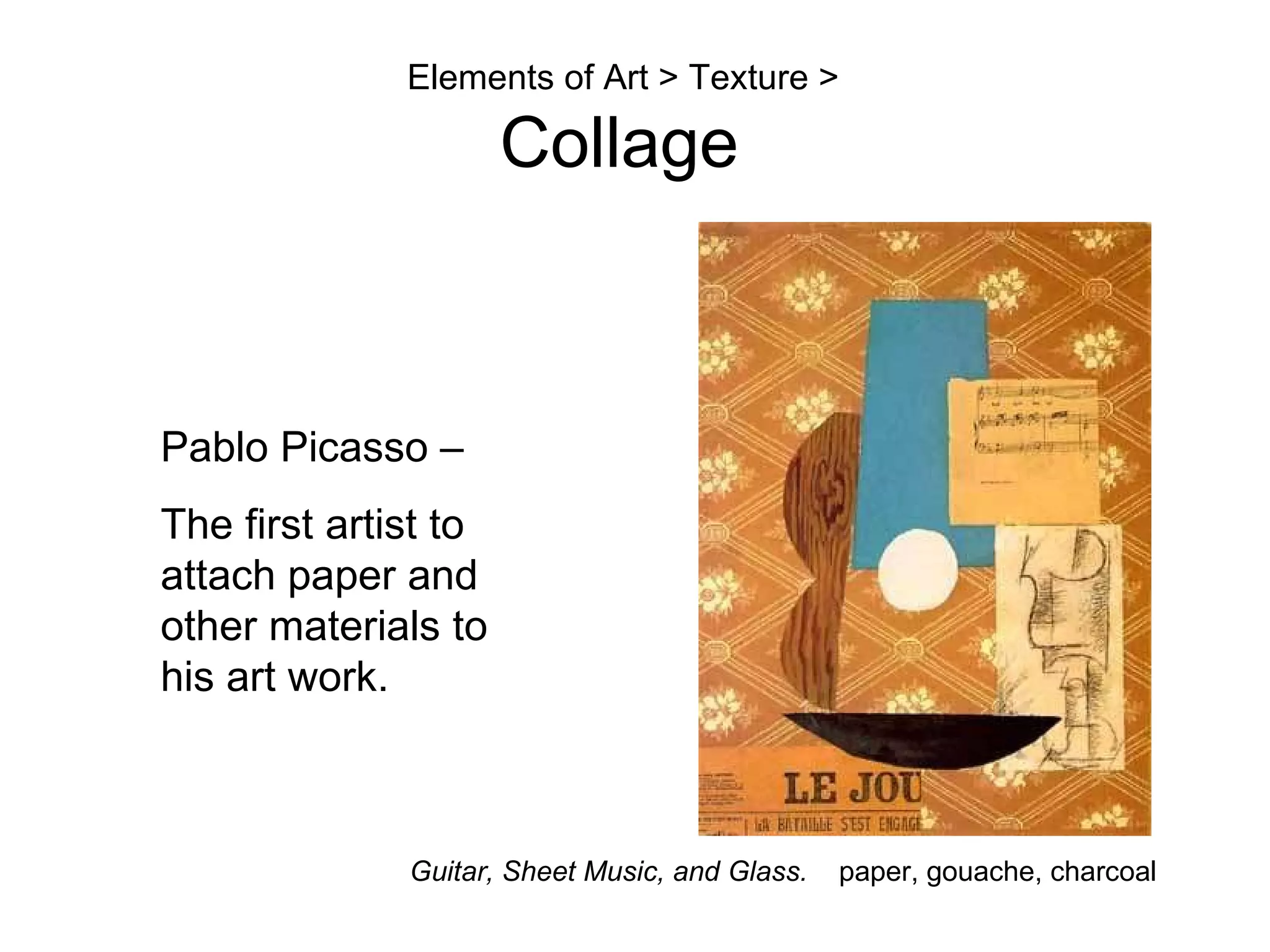
Now, here's where things get really fun. Picasso was one of the first artists to use collage as a serious art form. He'd cut out shapes and images from newspapers, magazines, wallpaper, you name it, and stick them onto his paintings or create entirely new pieces.

Imagine Picasso, scissors in hand, snipping and sticking, creating something beautiful and unique from everyday objects. It's like he was saying, "Art is everywhere, you just need to see it."
Assemblage: Picasso's Puzzle Pieces
But Picasso didn't stop at two-dimensional collages. Oh no, he took it to the next level with assemblage. He'd glue, nail, or otherwise attach objects to a surface to create a 3D artwork. Think of it like a puzzle, but instead of a picture on the box, Picasso had a vision in his head.
These weren't just any objects, either. He used things like bottle caps, keys, toys, even old shoes. Each one with its own story, its own history, just waiting for Picasso to give it new life.
Inspiration: Picasso's Legacy
So, why does all this matter? Because Picasso shows us that art isn't about sticking to the rules. It's about experimenting, exploring, and expressing yourself. It's about finding beauty in the ordinary and creating something extraordinary.
And the best part? You don't need to be a Picasso to do it. All you need is a little curiosity, a bit of courage, and a willingness to play. So, go on, grab some paper, some paint, some old magazines, and see what you can create. Who knows? You might just find your inner Picasso.
And remember, as Picasso himself said, "Art is a lie that makes us realize truth." So, go out there, lie a little, and see what truths you can find. Happy creating!