
What Was The Enigma Used For
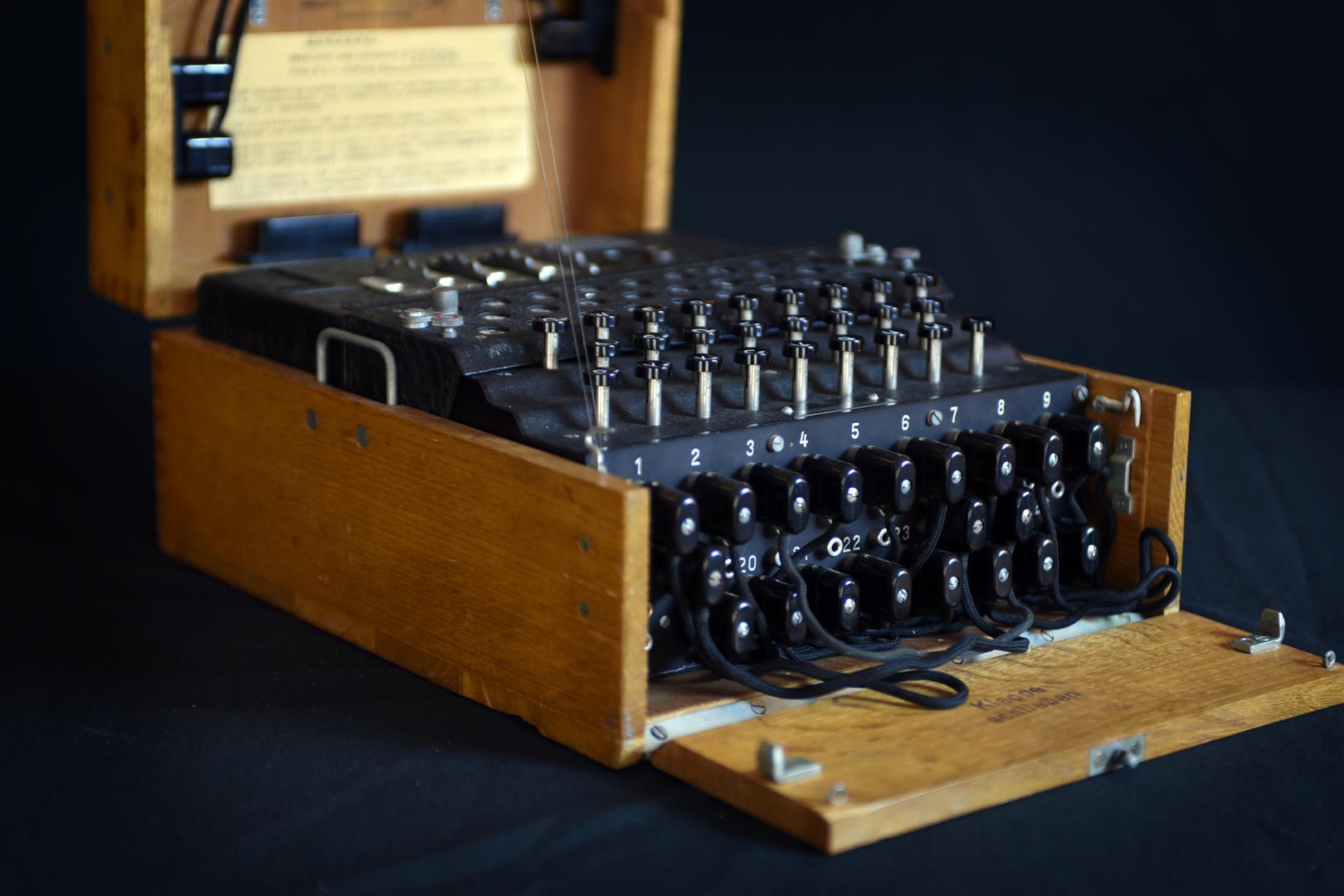
Ever wondered about that mysterious machine from World War II that kept codebreakers up at night? You're talking about the Enigma, a complex cipher device that was once the bane of Allied forces' existence. But what was this contraption used for, and how did it become an icon of wartime intrigue? Let's dive in.
Cracking the Code on Enigma
The Enigma was essentially a sophisticated encryption machine, used by the German military to scramble messages during World War II. It was first introduced in the 1910s, but it was during the war that it became a symbol of Nazi ingenuity and Allied frustration.
At its heart, the Enigma was a typewriter that, when a key was pressed, would scramble the letter into a different one based on a complex set of rules. The twist? The rules changed with every press, making it nearly impossible to crack without the right tools and know-how.
Enigma in Action
Imagine you're a German U-boat commander, sinking Allied ships left and right. You send a message back to HQ using your Enigma machine. The message comes out looking something like this: HXF UIF ZKV NBO PQR. To the Allies, it's just gibberish. But to your comrades back home, it's a clear message thanks to their own Enigma machine.
This was the Enigma's power: it allowed secure communication over vast distances. But it was also its downfall. Because if you could crack the code, you could read every German message that came through. And that's exactly what the Allies did.
Breaking the Enigma
Enter the codebreakers, a motley crew of mathematicians, linguists, and crossword enthusiasts led by the enigmatic (pun intended) Alan Turing. They worked tirelessly at Bletchley Park, the secret British codebreaking center, to crack the Enigma.

They had a few advantages. For one, they knew the Enigma's basic design thanks to Polish codebreakers who had made significant progress before the war. They also had intercepts of Enigma messages, which they could use to test their theories.
But the real breakthrough came with the invention of the bombe, a machine designed by Turing and Gordon Welchman. The bombe was essentially a codebreaking computer, capable of testing thousands of Enigma settings per second. It was a game-changer.
From Enigma to Victory
The Allies' ability to read Enigma messages, known as Ultra intelligence, was a major turning point in the war. It allowed them to anticipate German moves, redirect ships away from U-boat ambushes, and even turn the tide of the Battle of the Atlantic.

But it was a closely guarded secret. The Germans had no idea their messages were being read, and the Allies went to great lengths to keep it that way. Even today, the full extent of Ultra's impact is still debated among historians.
Enigma Today
So, what's the Enigma's legacy? Well, it's a reminder of the power of codebreaking and the importance of secure communication. It's also a testament to the human spirit, showing what we can achieve when we put our minds to it.
And if you're interested in trying your hand at codebreaking, there are plenty of online games and puzzles inspired by the Enigma. Who knows, you might just crack the code and feel like a wartime hero yourself.
But remember, next time you're struggling with a password or a Wi-Fi code, it's all thanks to the Enigma and the brave codebreakers who took on the ultimate challenge.