
Where And When Did Fauvism Begin
Fauvism: A Wild Ride Through Art History
Ever wondered where that vibrant, bold art style you've seen in museums or on Instagram originated? Welcome to the world of Fauvism, a colorful revolution that burst onto the art scene in the early 20th century. Let's dive in and explore where and when this wild ride began.
Marseille, 1904: The Birthplace of Fauvism
Imagine the sun-kissed streets of Marseille, a bustling port city in the south of France. It's here, in the early 1900s, that a group of artists gathered, their palettes brimming with hues that would soon shock the art world. The story of Fauvism begins at the Salon d'Automne, an annual art exhibition held in Paris.
In 1904, a critic named Louis Vauxcelles visited the exhibition and, upon seeing some of these artists' work, exclaimed, "Donatello chez les fauves!" - "Donatello among the wild beasts!" He was referring to a sculpture by Donatello that was displayed near paintings by Henri Matisse, André Derain, and Maurice de Vlaminck. The term "Fauvism" was born, and it would forever be associated with these artists and their radical new style.
Must Read
What Made Fauvism So Wild?
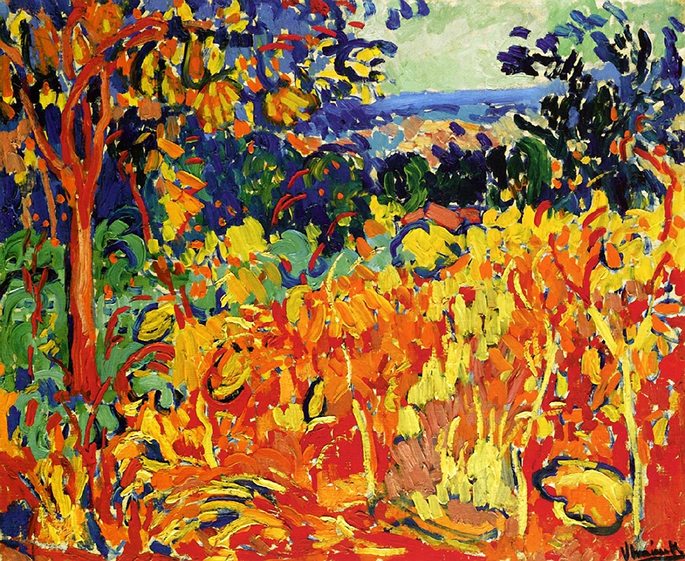
Fauvism was all about breaking the rules. These artists rejected the traditional approach to color and form, instead favoring bright, bold hues and loose, expressive brushstrokes. They drew inspiration from the vibrant colors of Van Gogh, the patterns of Japanese art, and the light and color of Impressionism. But they took these influences and pushed them even further.
Think of it like that time you decided to spice up your wardrobe. You started with a few colorful accessories, but then you thought, "Why not go all out?" Fauvism was that moment of going all out. It was a declaration that art didn't have to be realistic or subtle - it could be loud, it could be wild, and it could be full of life.

Fauvism in Action: A Trip to the Musée d'Orsay
Want to see Fauvism in action? Head to the Musée d'Orsay in Paris. Here, you'll find works by some of the most famous Fauvists, like Matisse's "The Green Stripe" and Derain's "Charing Cross Bridge." These paintings are like a party for your eyes - they're bold, they're bright, and they're full of energy. It's like stepping into a room where someone's turned up the volume on the color.
But Fauvism wasn't just about the art. It was also about the artists themselves. These were people who weren't afraid to take risks, to challenge the status quo, and to live life on their own terms. They were the original art rebels, and their spirit lives on in every vibrant canvas.

Bringing Fauvism into Your Daily Life
So, how can you bring a little Fauvism into your daily life? Start with your surroundings. Add a pop of color to your home - a bright throw pillow, a vibrant painting, or a plant in a bold pot. It's like a little Fauvist revolution in your living room.
And don't forget to embrace your own inner Fauvist. Whether it's trying a new recipe, taking a different route to work, or just wearing that bright shirt you've been saving for a special occasion, remember that life's more fun when you're not afraid to be a little wild.
After all, as Matisse once said, "What I dream of is an art of balance, of purity and serenity, devoid of troubling or depressing subject matter, an art which might be for every mental worker, for the businessman as well as the man of letters, for example, a soothing, calming influence on the mind, something like a good armchair which provides relaxation from physical fatigue." But sometimes, you need to make a little noise before you can find that balance. And that, my friends, is the spirit of Fauvism.