
Why Are Faberge Eggs Worth So Much

Unscrambling the Enigma: Why Fabergé Eggs Are Worth Their Weight in Gold
Ever wondered why those fancy, egg-shaped trinkets from Russia are worth more than your average nest egg? We're talking, of course, about Fabergé eggs - the ultimate symbol of opulence and craftsmanship. Let's dive into the world of these exquisite ornaments and unravel the mystery behind their astronomical price tags.
Who Was This Fabergé Guy Anyway?
Peter Carl Fabergé, a name that's become synonymous with luxury, was a Russian jeweler of French descent. Born in the mid-19th century, he took over his father's jewelry business in St. Petersburg and turned it into an empire. His creations were the epitome of craftsmanship, blending precious metals, gemstones, and intricate enameling techniques to produce masterpieces that left royals and aristocrats alike, egg-static.
Fabergé's big break came when Tsar Alexander III commissioned two Easter eggs as gifts for his wife, Empress Maria Feodorovna, in 1885. These weren't your average Easter eggs, mind you - they were encrusted with diamonds, rubies, and other precious stones. And thus, a tradition was born.
Must Read
Eggs-traordinary Craftsmanship
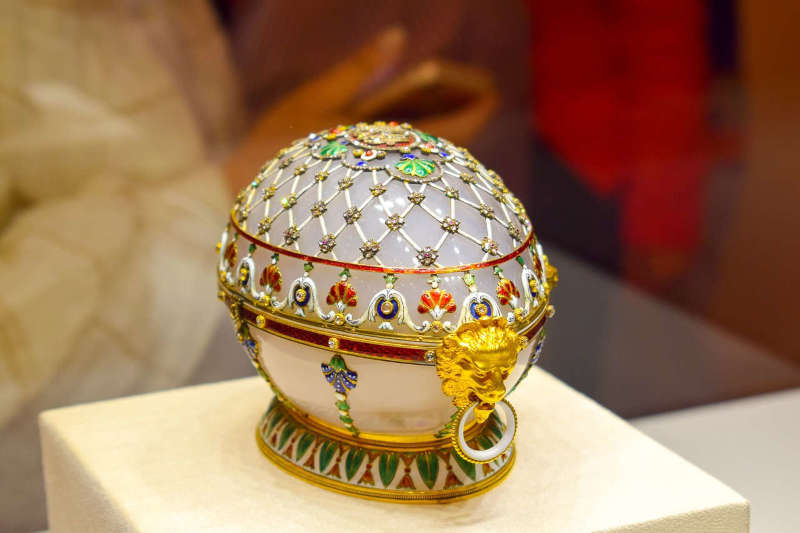
Each Fabergé egg is a testament to the skill and artistry of its creators. They're not just pretty on the outside; they've got surprises hidden within. The first egg, the Hen, had a golden yolk that contained a tiny replica of the imperial crown from atop the Alexander Palace. Other eggs held miniature portraits, watches, or even a model of the imperial family's yacht.
The craftsmanship involved is mind-boggling. Take the Mosaic Egg, for instance. It's covered in a mosaic of rose-cut diamonds, sapphires, and rubies, all set in gold. Each stone is cut and placed by hand, making it a true labor of love. Or how about the Cuckoo Clock Egg? It features a cuckoo bird that pops out of a golden onion dome at the top, accompanied by a tiny pendulum that swings back and forth. It's like having a mini Big Ben on your mantelpiece!
Rarity Value
Fabergé eggs are rare, and that rarity drives up their value. Only 50 imperial eggs were created between 1885 and 1917, and not all have survived the test of time. Some were lost, stolen, or destroyed during the Russian Revolution. Today, there are only 43 known surviving imperial eggs, making them as scarce as hen's teeth.

Moreover, each egg is unique, designed to celebrate a specific event or person. The Alexander III Equestrian Egg, for example, commemorates the tsar's coronation. The Rose Trellis Egg was a gift to celebrate the birth of Tsarevich Alexei, the long-awaited heir to the throne. This uniqueness adds to their allure and desirability.
Egg-cellent Investment
Fabergé eggs aren't just beautiful; they're also a smart investment. In 2007, a private collector bought the Forbes Magazine - yes, that Forbes - for $9.6 million at an auction. It was the highest price ever paid for a Fabergé egg at the time. Talk about putting all your eggs in one basket!
But why are they so valuable? Apart from their craftsmanship and rarity, Fabergé eggs are also a tangible link to Russian imperial history. They're a piece of art, a piece of history, and a piece of jewelry all rolled into one. It's no wonder they fetch such astronomical prices.
Egg-ucation: How to Spot a Fake
Before you go shelling out millions for an egg, here are some tips to help you spot a fake:
- Check the mark: A genuine Fabergé egg will have the maker's mark - a double-headed eagle with the initials 'PF' - stamped on it.
- Inspect the workmanship: Fabergé eggs are meticulously crafted. If the workmanship looks sloppy or the stones aren't perfectly set, it's likely a fake.
- Look for provenance: If an egg comes with a solid provenance - that is, a documented history of ownership - it's more likely to be authentic.
From Palace to Parlor: The Fabergé Egg in Daily Life
So, what does all this have to do with our daily lives? Well, while we might not be able to afford a real Fabergé egg, we can certainly appreciate the artistry and craftsmanship that goes into creating them. It's a reminder to cherish the beautiful, handmade things in our lives - whether it's a piece of jewelry, a work of art, or even a handwritten letter.
Moreover, the story of Fabergé eggs is a testament to the power of tradition and craftsmanship. In a world dominated by mass production and digital technology, there's something deeply satisfying about an object that's been painstakingly created by human hands.
So, the next time you're hunting for Easter eggs, remember the Fabergé eggs. They're not just pretty; they're a symbol of artistry, history, and the enduring appeal of the handmade.