
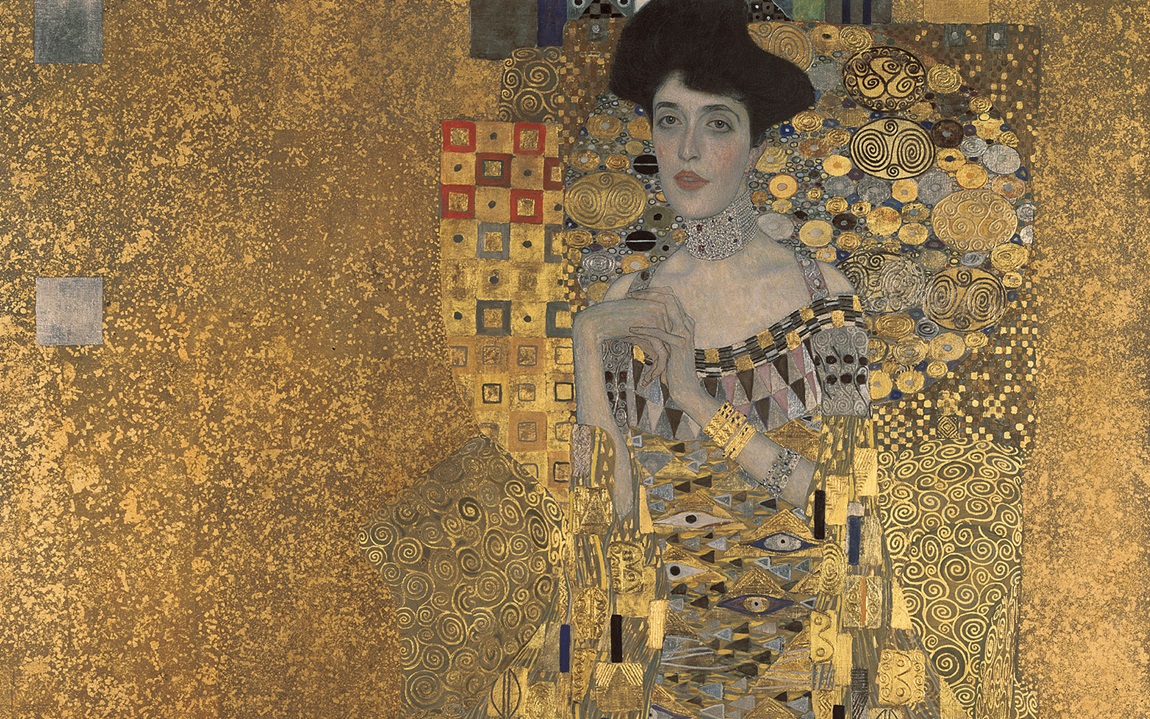
Woman In Gold By Gustav Klimt

Embrace the Gilded Age: A Chat with Gustav Klimt's 'Woman in Gold'
Ever found yourself daydreaming about trading your cubicle for an opulent Viennese salon, sipping champagne while draped in gold? Well, you're not alone. Gustav Klimt's 'Woman in Gold' (1903-1907) has been inspiring such fantasies for over a century. Let's dive into the world of this iconic painting and discover why it's still a golden girl after all these years.
Meet the Lady in Gold
'Woman in Gold', also known as 'Portrait of Adele Bloch-Bauer I', is a masterpiece from Klimt's 'Golden Phase'. The subject, Adele Bloch-Bauer, was an Austrian socialite and wife of a wealthy industrialist. She's not just another pretty face; Adele was a patron of the arts and a friend of Klimt, commissioning him to create her portrait.
Klimt, with his signature symbolist style, transformed Adele into a vision of modern womanhood. She's not demure or submissive; instead, she's a powerful, confident figure, her gaze direct and assertive. It's no wonder she became an icon of female empowerment.
Why the Gold, Though?
Klimt's use of gold isn't just about bling (though let's face it, there's plenty of that). Gold in his art represents the eternal, the divine, and the universal. It's a nod to ancient Egyptian art, which Klimt admired. So, when you look at 'Woman in Gold', you're not just seeing a portrait; you're gazing upon a modern goddess.
Fun fact: Klimt used real gold leaf in this painting. That's right, it's not just a gilded frame; Adele herself is literally covered in gold. No wonder she's the star of the show!

Klimt's World: Art Nouveau Meets Symbolism
To truly appreciate 'Woman in Gold', you've got to understand the world Klimt was painting in. Vienna at the turn of the 20th century was a hotbed of creativity, with Art Nouveau and Symbolism ruling the roost. Klimt was a founding member of the Vienna Secession, a group of artists who rebelled against academic art and embraced modernism.
Think of Klimt as the Andy Warhol of his time - a cultural icon who pushed boundaries and defined an era. His work, including 'Woman in Gold', is a testament to that.
From Vienna to Hollywood: 'Woman in Gold' on Screen
In 2015, 'Woman in Gold' took center stage in a major motion picture. The film, also titled 'Woman in Gold', tells the story of Maria Altmann, an elderly Jewish refugee who fought to reclaim her family's Klimt paintings, including this masterpiece, from the Austrian government.
The film is a testament to the power of art to inspire, provoke, and even change lives. It's a must-watch for any Klimt fan, or anyone who loves a good underdog story.
Bringing 'Woman in Gold' into Your Life
You might not be able to wear a gold dress like Adele (though, let's be real, if you can, you should), but you can still bring a touch of 'Woman in Gold' into your daily life. Here are a few tips:
- Embrace Your Inner Goddess: Channel Adele's confidence and assertiveness. You're a modern woman, after all!
- Add a Touch of Glam: Incorporate gold into your home decor or wardrobe. A golden picture frame, a shimmering dress, or even a metallic eyeshadow can do the trick.
- Cultivate Your Inner Art Historian: Learn more about Klimt, Art Nouveau, or Symbolism. The more you know, the more you'll appreciate 'Woman in Gold' and other masterpieces.
A Final Reflection
'Woman in Gold' is more than just a painting; it's a symbol of empowerment, a testament to creativity, and a window into a fascinating era. It reminds us that art has the power to inspire, provoke, and connect us across time and space. So, the next time you find yourself daydreaming about trading your cubicle for a Viennese salon, remember: you're not just dreaming of a gilded age; you're dreaming of a world shaped by art, creativity, and the power of a woman in gold.