
How To Light A Painting

Ever found yourself admiring a painting in a museum, or perhaps one hanging in your friend's living room, and thought, "I wish I could light that masterpiece like a pro"? Well, you're in luck. We're about to spill the beans on how to light a painting like it's your very own Sistine Chapel. So, grab your remote, and let's dive in.
Understanding Light
First things first, let's talk about light. It's not just about illuminating your painting; it's about enhancing its beauty, drawing out its colors, and creating a mood. Think of it like a spotlight on Broadway - it's not just there to show you what's happening, it's there to tell a story.
Artists have been using light to their advantage for centuries. Caravaggio's dramatic chiaroscuro, for instance, is all about using light and shadow to create drama. So, let's channel our inner Renaissance master and get started.
Must Read
Types of Light
There are three main types of light sources you'll be working with: incandescent, fluorescent, and LED. Incandescent lights are warm and cozy, like a sunset. Fluorescent lights are cool and bright, like a cloudy day. LED lights are versatile, with a range of colors and temperatures.
Fun fact: LEDs are so energy-efficient, they could light up the Eiffel Tower for 16 hours on just one kilowatt-hour of electricity. Now that's a bright idea!
Lighting Techniques
Direction
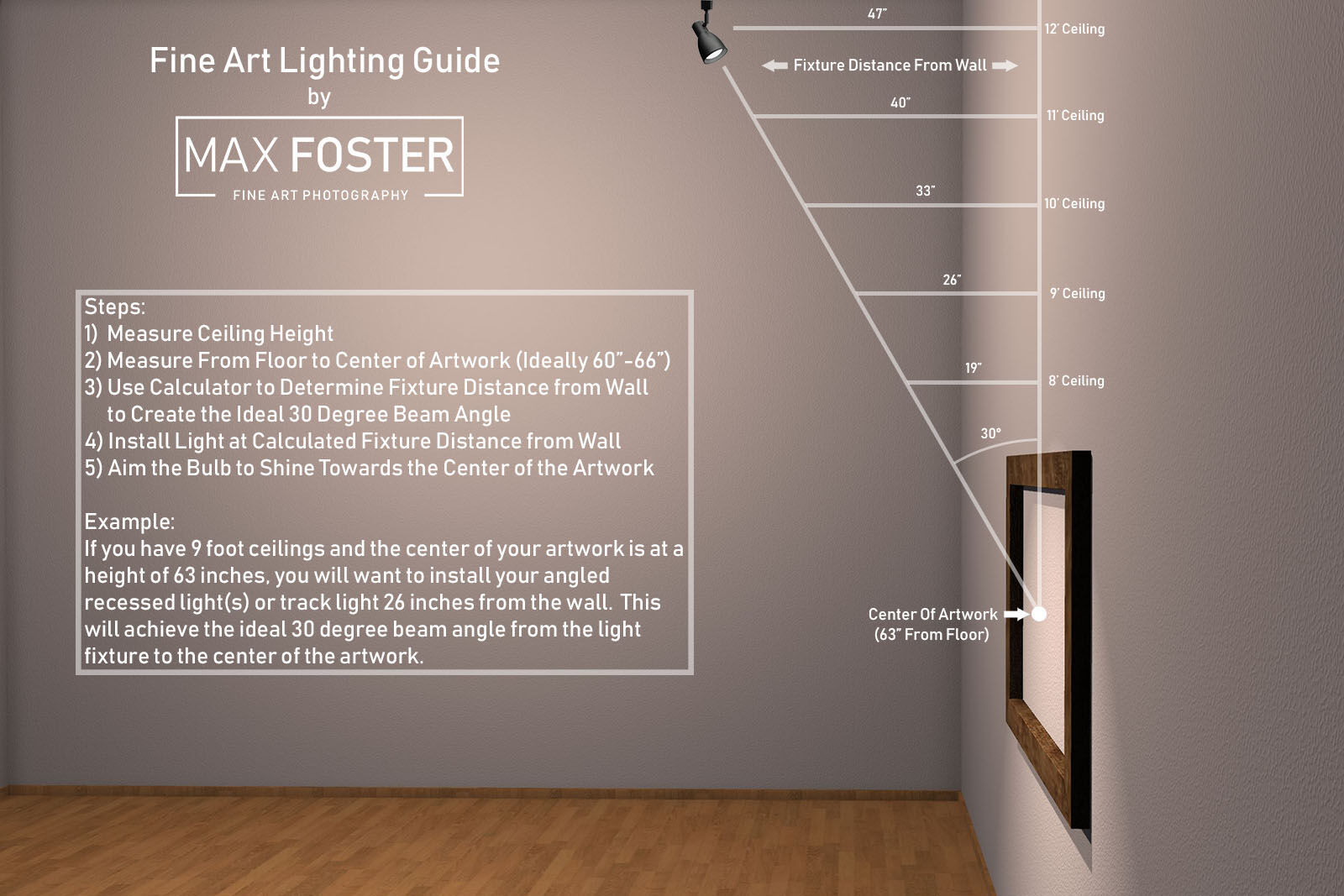
Lighting a painting is all about direction. You want to cast a soft, even glow across the canvas, not create harsh shadows. Think of it like a gentle kiss, not a slap in the face. So, position your lights at a 30-45 degree angle to the painting, either from above or below.
Pro tip: Avoid direct lighting, which can create glare and wash out colors. Instead, use indirect or diffused light to create a soft, inviting glow.
Color Temperature
Color temperature, measured in Kelvin (K), affects how colors appear. Warmer lights (2700K-3000K) bring out reds and oranges, while cooler lights (5000K-6500K) enhance blues and greens.
For instance, a warm light can make a sunset landscape pop, while a cool light can bring out the blues in a seascape. It's all about playing to your painting's strengths.
Ambient Light
Don't forget about ambient light - that's the light that fills the rest of the room. It should be soft and even, not too bright or too dim. Think of it like the chorus in a song - it should support the main act (your painting) without overshadowing it.
Cultural reference: In the world of film, cinematographers use ambient light to set the mood. Think of the soft, golden light in a Wes Anderson film, or the stark, cold light in a Hitchcock thriller. Your painting deserves the same level of attention!
Practical Tips
Now, let's get practical. Here are some tips to make your lighting setup a breeze:
- Use adjustable lights with dimmers to fine-tune your lighting.
- Consider using track lighting or adjustable picture lights for easy positioning.
- Test different lighting scenarios - don't be afraid to experiment!
- Remember, less is often more. A single well-placed light can be more effective than a dozen poorly placed ones.
Reflection
So, there you have it - the art of lighting a painting. It's not just about illuminating a canvas; it's about creating an experience. It's about telling a story, evoking an emotion, and making a moment memorable.
And that, dear reader, is what life's all about. It's about the little moments, the details, the things that make us feel alive. So, go on, light up your world. Make it bright, make it beautiful, make it you.