
The Night Watch Of 1642

Hey there, art enthusiast! You know how sometimes you're just chillin', scrolling through your feed, and suddenly you stumble upon a masterpiece that makes you go, "Whoa, how did I not know about this before?!" Well, today, we're going on a little art adventure to explore The Night Watch by Rembrandt, painted way back in 1642. Grab a coffee, get comfy, and let's dive in!
So, who's this Rembrandt guy?
Alright, let's start with a quick bio. Rembrandt Harmenszoon van Rijn, or just Rembrandt for short, was a Dutch painter, printmaker, and draughtsman. Born in 1606, he was one of the most important painters in Dutch history, and his work is still celebrated today. Now that we've got the basics down, let's talk about The Night Watch!
What's the big deal about this painting?
First off, it's massive! Measuring over 11.9 feet by 14.3 feet, it's like Rembrandt was challenging us to find a wall big enough to hang it. But size isn't everything, right? The real magic lies in the story it tells and the way Rembrandt tells it.
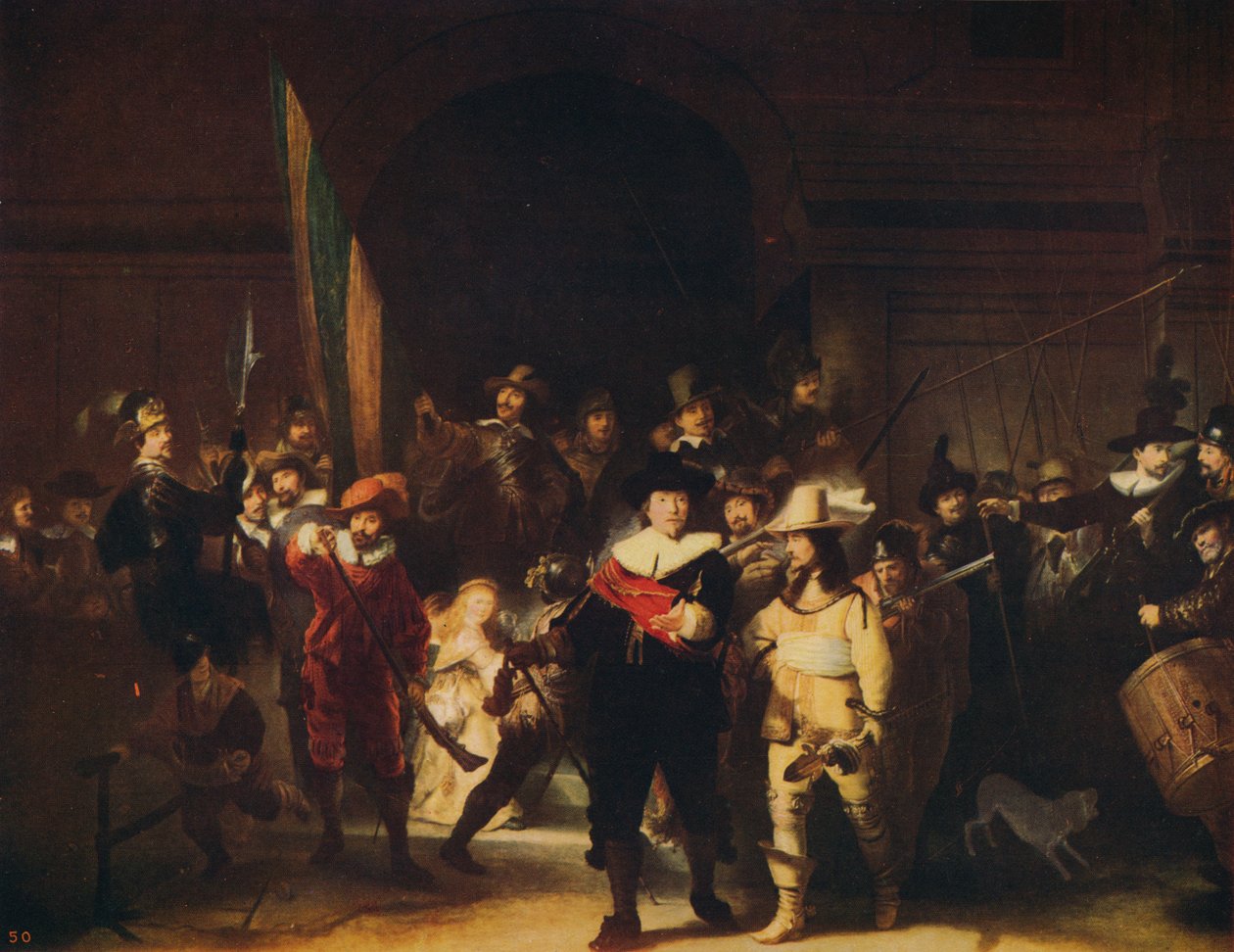
You see, The Night Watch isn't just a painting of some militia guys on their way to a night patrol. It's a snapshot of 17th-century Amsterdam, filled with details that give us a glimpse into everyday life. It's like Rembrandt said, "Hey, let me show you what's really going on here!"
Meet the crew
Now, let's introduce you to the main characters. At the center, we've got Captain Frans Banninck Cocq and his lieutenant, Willem van Ruytenburch. They're the ones leading the militia, looking all serious and important. But here's where it gets fun – Rembrandt didn't just paint them standing still. No, he wanted to show them in action!
So, he painted them mid-motion, giving the whole scene a dynamic, lively feel. It's like Rembrandt was saying, "Hold on, let me capture that moment when they're actually doing something!"

Why the long face?
You might be wondering, "Why does everyone look so intense? They're going on a night patrol, not storming the beaches at Normandy!" Well, that's because Rembrandt wanted to show off the militia's seriousness and discipline. Plus, let's be real, those guys were probably just excited to have their portraits painted by the famous Rembrandt!
Easter eggs and hidden gems
Now, here's where things get really interesting. Rembrandt loved hiding little details and secrets in his paintings, and The Night Watch is no exception. For example, if you look closely, you'll see a dog running away from the militia. Some art historians think it might represent the fear and chaos that can come from war. Pretty deep, huh?
And get this – there's even a self-portrait of Rembrandt hidden in the crowd! Can you spot it? It's like he was saying, "Hey, I was here too!"
From glory to... storage?
Sadly, The Night Watch's glory days didn't last forever. Over time, the painting was cut down to fit in a new space, and it even spent some time in storage. But don't worry, art lovers! In 1975, the painting was restored to its former glory, and now it's back on display at the Rijksmuseum in Amsterdam, where it belongs.
Why we still love it
So, why do we still care about The Night Watch after all these years? Well, for one thing, it's just plain awesome to look at. But more than that, it's a window into the past, a story told by Rembrandt that still resonates today. It's a reminder that art can be powerful, engaging, and just plain fun – even 380 years later!
And there you have it, folks! Our little art adventure is coming to an end, but I hope you've enjoyed exploring The Night Watch with me. Next time you're feeling like you need a cultural pick-me-up, come back and visit – there's always more to discover in the world of art!
Stay curious, and happy exploring!