
A List Of Art Movements
Art Movements: A Colorful Walk Through History
Ever wondered why that painting in your grandma's living room looks so different from the one you saw at the museum last weekend? Chances are, they belong to different art movements! Think of art movements like different chapters in the big book of art history. Each chapter has its own unique style, story, and vibe. Let's dive in and explore some of these fascinating chapters together.
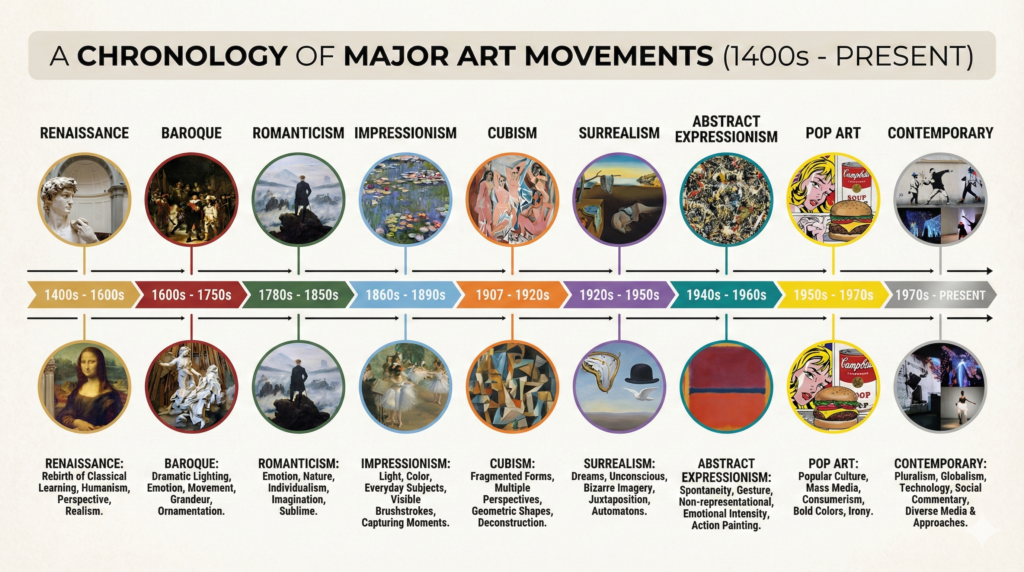
Renaissance: The Party Starter
Imagine you're at a party in 15th century Italy. The hosts are Leonardo da Vinci and Michelangelo. What kind of art would you expect to see on the walls? Probably not graffiti or abstract paintings, right? That's because we're in the Renaissance era, baby! This was the time when art was all about perspective, realism, and celebrating the human form. Think of it as the original 'back to basics' movement. Da Vinci's "Mona Lisa" and Michelangelo's "David" are perfect examples of this era's love for detail and realism.
Baroque: The Drama Queens
Now, let's fast forward to the 17th century. We're in Rome, and our hosts are Caravaggio and Gian Lorenzo Bernini. This party is all about dramatic lighting, rich colors, and over-the-top emotions. Welcome to the Baroque era! Baroque art is like the Hollywood blockbusters of the art world - think grand scenes, intense emotions, and a whole lot of gold. Caravaggio's "Judith Beheading Holofernes" and Bernini's "Ecstasy of Saint Teresa" are perfect examples of this era's dramatic flair.
Romanticism: The Nature Lovers
Let's take a break from the parties and head out into the countryside. It's the 19th century, and we're in the middle of the Romanticism era. This era was all about emotion, individualism, and the beauty of nature. Think of it like the art world's version of a nature documentary. Artists like William Blake and J.M.W. Turner created pieces that were all about capturing the raw, emotional power of the natural world. Turner's "The Fighting Temeraire" is a perfect example of this era's love for nature and nostalgia.
Impressionism: The Light Catchers
Now, let's grab some coffee and head to a Parisian café. It's the late 19th century, and we're in the middle of the Impressionism era. These artists were all about capturing the fleeting moments of everyday life, with a focus on light and color. Think of it like the art world's version of Instagram - all about those perfect, candid moments. Claude Monet's "Impression, Sunrise" and Edgar Degas' "The Dance Class" are great examples of this era's unique style.

Surrealism: The Dreamers
Alright, let's pour ourselves a glass of absinthe and get weird. It's the early 20th century, and we're in the middle of the Surrealism era. These artists were all about exploring the subconscious mind and creating dreamlike, often bizarre, images. Think of it like the art world's version of a lucid dream. Salvador Dalí's "The Persistence of Memory" and René Magritte's "The Treachery of Images" are perfect examples of this era's surreal style.
Pop Art: The Consumerists
Let's end our art history tour in a bustling city, like New York or London, in the mid-20th century. We're in the middle of the Pop Art era. These artists were all about incorporating elements of popular culture into their work - think comic books, advertisements, and everyday objects. Think of it like the art world's version of a shopping spree. Andy Warhol's "Campbell's Soup Cans" and Roy Lichtenstein's "Whaam!" are great examples of this era's bold, colorful style.

So, why should you care about art movements? Well, understanding these different chapters in art history can help us appreciate the art we see every day - whether it's in a museum, on a billboard, or even on a t-shirt. It's like understanding different genres in music - once you know the basics, you can enjoy the symphony so much more!
And who knows, maybe next time you're at a party, you'll be able to tell your friends all about the art movement that inspired the host's decor. You'll be the life of the party, in more ways than one!