
Ed Ruscha Twentysix Gasoline Stations

So, there I was, cruising down the highway, the sun dipping low, casting that golden glow that makes everything look like a postcard. I was on one of those aimless drives, you know the kind, where the destination doesn't really matter, it's all about the journey. I passed by a string of old gas stations, their neon signs flickering like tired old ghosts. It got me thinking, how many times have I driven by these places without a second glance? How much history and character have I missed in my haste to get from point A to point B?
That's when it hit me, Ed Ruscha's Twentysix Gasoline Stations! I'd seen it in art books, but it had never really clicked until that moment. Ruscha, that clever guy, had done exactly what I'd just been doing, but with a twist. He'd driven along Route 66, snapped pictures of twenty-six gas stations, and turned them into a book. Talk about a unique perspective on the American landscape!
From the Road to the Page
Ruscha, born in 1937, was a product of the post-war American era. He grew up in Oklahoma, moved to California, and ended up in the heart of the art scene, LA. In the 1960s, he started this gas station project, a time when the country was in the midst of a love affair with the car and the open road. It was also a time when art was starting to break away from traditional norms, and Ruscha was right there, pushing those boundaries.
Must Read
He started with a simple idea: document the gas stations he saw on his drives. But it was how he executed this idea that made it so interesting. He didn't go for the fancy, glossy photos. No, he used a simple 35mm camera, printing the images in black and white. The result? A raw, honest portrayal of these often overlooked buildings.
More Than Just Gas Stations
You might think, "Okay, it's just a book of gas stations. Big deal." But here's the thing, Ruscha wasn't just taking pictures of buildings. He was capturing a moment in time, a snapshot of America's love affair with the car and the open road. These gas stations were more than just places to fill up your tank, they were symbols of freedom, of adventure, of the American Dream.

Each station in the book has a number, a name, and an address. It's like a roadmap, an invitation to join Ruscha on his journey. It's not just about looking at the pictures, it's about imagining the stories behind them. Who worked there? Who stopped by? What were their stories?
And let's not forget the title. "Twentysix Gasoline Stations". It's not "Gasoline Stations", it's not "Twenty-Six Gasoline Stations". It's a specific number, a specific collection. It's like Ruscha is saying, "This is my selection, this is what I chose to document." It's personal, it's subjective, and that's what makes it so interesting.
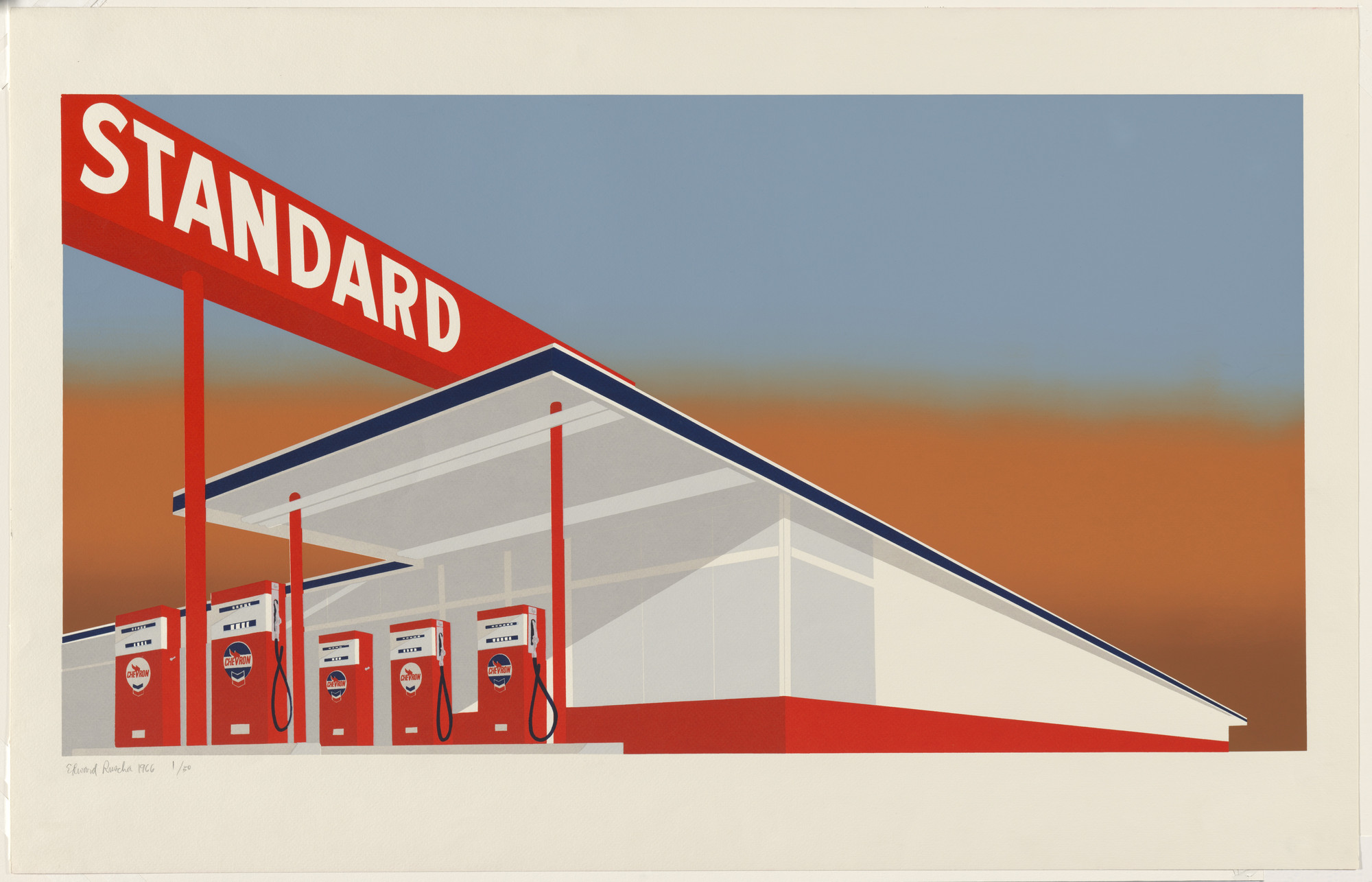
Art or Not Art?
Now, you might be thinking, "Is this even art?" Well, that's the beauty of it, isn't it? It's not a painting, it's not a sculpture. It's a book, a collection of photographs. But it's how Ruscha presented it, how he curated it, that makes it art. He took something everyday, something often overlooked, and turned it into something worth contemplating.
And that, my friends, is what art is all about. It's about finding beauty in the unexpected, about making us look twice at something we might have otherwise ignored. It's about telling a story, about capturing a moment in time. And that's exactly what Ed Ruscha did with his Twentysix Gasoline Stations.
So next time you're out on the road, take a moment to look at the gas stations. Don't just see a place to fill up your tank. See a piece of history, a symbol of the open road, a story waiting to be told. And who knows, maybe you'll find your own Twentysix Gasoline Stations.