
Portrait Of Adele Bloch-bauer Ii

Meet Adele: The Woman Behind the Iconic 'Woman in Gold'
Ever marveled at Gustav Klimt's 'Woman in Gold' and wondered who the lady in the shimmering gold dress was? Her name was Adele Bloch-Bauer, and she was an Austrian socialite, philanthropist, and the muse of the renowned artist. Today, we're going to take a leisurely stroll through Adele's life, her connection to Klimt, and the fascinating tale behind her portrait, 'Portrait of Adele Bloch-Bauer II'.
From Vienna to Venice
Adele was born into a wealthy Jewish family in Vienna in 1879. She was the only daughter of a successful banker, and her family was part of the city's cultural elite. Adele was known for her beauty, charm, and intellect, making her a sought-after figure in Vienna's high society. In 1907, she married Ferdinand Bloch-Bauer, a successful banker and art collector, who was also a close friend of Klimt.
In 1912, Adele and Ferdinand traveled to Venice, where they commissioned Klimt to create a portrait of Adele. This was not their first encounter with the artist; Klimt had already painted Adele's sister, Hermine Gallia, and Ferdinand was a prominent collector of Klimt's work. Little did they know, this trip would result in one of Klimt's most iconic paintings.
Must Read
Posing for Posterity
Klimt was captivated by Adele's beauty and charm. He decided to paint her in a style that would become his signature: a blend of Symbolism, Art Nouveau, and Ancient Egyptian art. Adele posed for Klimt in their Venetian villa, wearing a gold dress that shimmered in the sunlight. Klimt captured her essence, creating a portrait that was both alluring and enigmatic.
The resulting painting, 'Portrait of Adele Bloch-Bauer II', is a masterclass in Klimt's unique style. Adele's face is a study in geometry, her features simplified and stylized. Her dress is a cascade of gold, punctuated by intricate patterns that evoke both Art Nouveau and Ancient Egyptian art. The background is a swirl of gold and green, creating a sense of depth and movement.
From Private Collection to Global Icon
After Klimt's death in 1918, 'Portrait of Adele Bloch-Bauer II' remained in the Bloch-Bauer family's private collection. However, the family's fortunes changed dramatically with the rise of Nazism in Austria. In 1938, the Bloch-Bauers fled Vienna, leaving behind their art collection, including Adele's portrait.
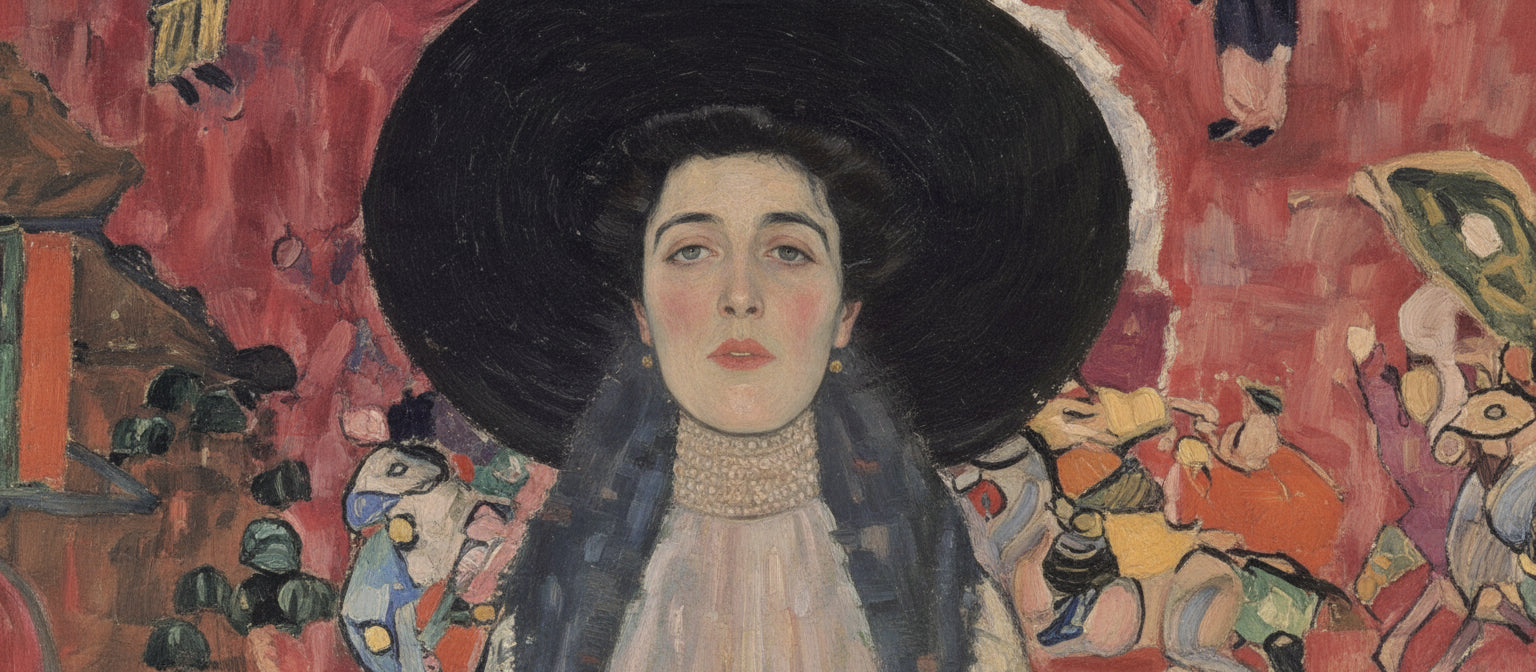
In 1941, the Nazis seized the painting and other works from the Bloch-Bauer collection, deeming them 'degenerate art'. The painting ended up in the collection of the Austrian Gallery in Vienna, where it remained for decades. It wasn't until 2006 that the painting was returned to the Bloch-Bauer family, following a lengthy legal battle.
Today, 'Portrait of Adele Bloch-Bauer II' is part of a private collection, but it has also been loaned to museums around the world, allowing art lovers to appreciate Adele's enduring beauty and Klimt's timeless artistry.
Bringing Adele Home: A Practical Tip
If you're planning a trip to Vienna, you can visit the Belvedere Palace, where a replica of 'Portrait of Adele Bloch-Bauer II' is on display. The original painting may not be there, but the replica offers a chance to appreciate Klimt's artistry up close. Plus, the Belvedere Palace is a stunning Baroque complex, making it a must-visit attraction in its own right.

Fun Fact: Adele's Other Portrait
Did you know that Klimt painted another portrait of Adele? 'Portrait of Adele Bloch-Bauer I' is perhaps Klimt's most famous work, and it's currently housed in the Neue Galerie in New York City. The two portraits are a fascinating study in contrast, with 'Portrait of Adele Bloch-Bauer I' featuring Adele in a more traditional, realistic style, while 'Portrait of Adele Bloch-Bauer II' is a bold, stylized exploration of Klimt's unique artistic vision.
Reflection: The Power of Art and Resilience
Adele Bloch-Bauer's story is a testament to the power of art to transcend time and circumstance. Her portrait has weathered war, exile, and legal battles, emerging as a symbol of resilience and beauty. As we go about our daily lives, let's remember Adele's enduring legacy and the power of art to inspire and uplift us.
So, the next time you find yourself admiring 'Woman in Gold', take a moment to think about Adele. Her story is a reminder that art has the power to connect us across time and space, and that even in the face of adversity, beauty can endure.