
What Is Buyers Premium In An Auction

So, you've decided to dip your toes into the world of auctions, huh? Maybe you've seen those intense bidding scenes in movies, or perhaps you're just looking to score a unique piece of art or vintage collectible. Either way, welcome to the fascinating realm of auctions! But before you dive in, let's talk about something that might pop up on your invoice and leave you scratching your head: buyer's premium.
Imagine you're at your first auction, heart pounding, adrenaline rushing. You've spotted a beautiful, antique pocket watch that's just calling your name. The gavel falls, and it's yours! You're ecstatic, but then the auctioneer hands you a bill that's a little higher than you expected. What gives?
That, my friend, is where the buyer's premium comes in. But don't worry, it's not some sneaky trick to empty your wallet. It's actually a pretty standard practice in the auction world, and it's all about covering costs and ensuring the auction house stays in business.
Must Read
What's the Deal with Buyer's Premium?
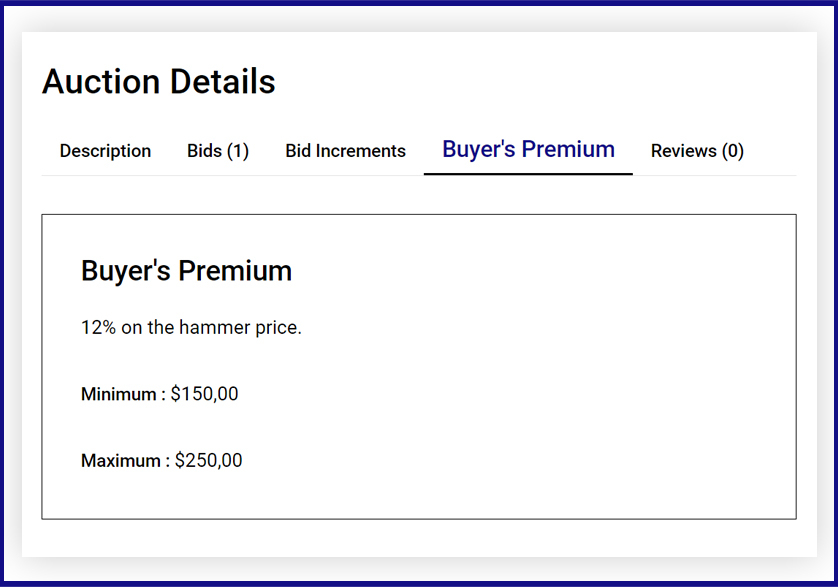
In simple terms, the buyer's premium is a fee that the auction house charges on top of the hammer price (that's the final bid price, for those new to the game). It's usually expressed as a percentage of the hammer price, and it can vary depending on the auction house and the type of auction.
For instance, some houses might charge a flat fee for lower-priced items and then switch to a percentage for higher-value lots. Others might have a tiered system, where the percentage decreases as the hammer price increases. It's always a good idea to check the auction house's terms and conditions to see what you're in for.
Why Do Auction Houses Charge a Buyer's Premium?
You might be wondering why auction houses need to tack on this extra fee. Well, running an auction isn't cheap. There are all sorts of costs to cover, like:
- Consignment fees: That's the charge for accepting an item into the auction.
- Catalog production: Creating those fancy catalogs with all the lot descriptions and photos.
- Advertising and marketing: Getting the word out about the auction to attract bidders.
- Staff and overhead: Paying the salaries of all those knowledgeable, well-dressed folks who make the auction run smoothly.
By charging a buyer's premium, the auction house can cover these costs and make a profit. It's a bit like a service fee, really. And remember, the seller usually pays a seller's commission as well, so the buyer's premium is just one part of the equation.
How to Calculate Buyer's Premium
Calculating the buyer's premium is pretty straightforward once you know the formula. Here's how it works:
Buyer's Premium = (Hammer Price x Buyer's Premium Rate) + Buyer's Premium Fee (if applicable)
Let's say you've just won a lot with a hammer price of $5,000, and the auction house charges a 20% buyer's premium with no additional fee. Your total cost would be:
Total Cost = Hammer Price + Buyer's Premium
Total Cost = $5,000 + ($5,000 x 0.20)
Total Cost = $5,000 + $1,000
Total Cost = $6,000
Easy peasy, right? Just remember to factor in any additional fees, like taxes or shipping, and you're good to go.

Can You Negotiate the Buyer's Premium?
Now, you might be thinking, "Is there any way to negotiate this fee?" While it's not common, some auction houses might be open to discussing the buyer's premium, especially if you're a frequent bidder or you're buying multiple lots. It never hurts to ask, right?
But remember, the buyer's premium is usually non-negotiable, and it's built into the final price you see. So, if you're not happy with the fee, you might want to consider bidding at an auction house with a lower rate. There are plenty of options out there, so do your research and find the one that works best for you.
Final Thoughts
So, there you have it! The buyer's premium might seem like a sneaky extra fee, but it's actually an important part of the auction process. It helps keep the auction house running and ensures that you can continue to bid on all those amazing lots.
Just remember to do your homework before you start bidding. Check the auction house's terms and conditions, and make sure you understand all the fees involved. That way, you can bid with confidence and maybe even snag that beautiful pocket watch you've had your eye on.
Happy bidding, and until next time, keep your paddle raised high!